|
Kyoto/Nara, Japan
Monday, June 5, 2017
|
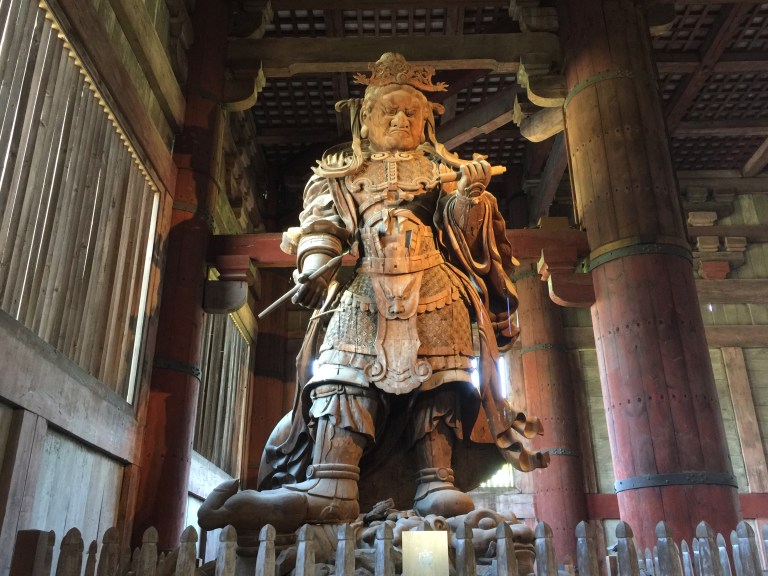
This morning after breakfast we drove 90 minutes to Nara City to tour two shrines. Nara city was Japan’s 8th-century capital and home to many ancient shrines and temples. We started our tour at the Todaiji Temple, the world’s largest wooden building, and the surrounding deer park where tame deer roam freely. Our guides told us not to feed the deer as they get aggressive once someone starts feeding them. We watched them surge after a young girl who had dear food in her hand. Hangry deer! Inside the expansive temple, sits an enormous bronze Daibutsu Buddha that weighs 550 tons. There are several groups of teenage school children touring the sites. They have required homework to complete, part of which involves making contact with a foreigner and asking questions. So we and another couple obliged them. They were very sweet. We also posed for photo’s with them.
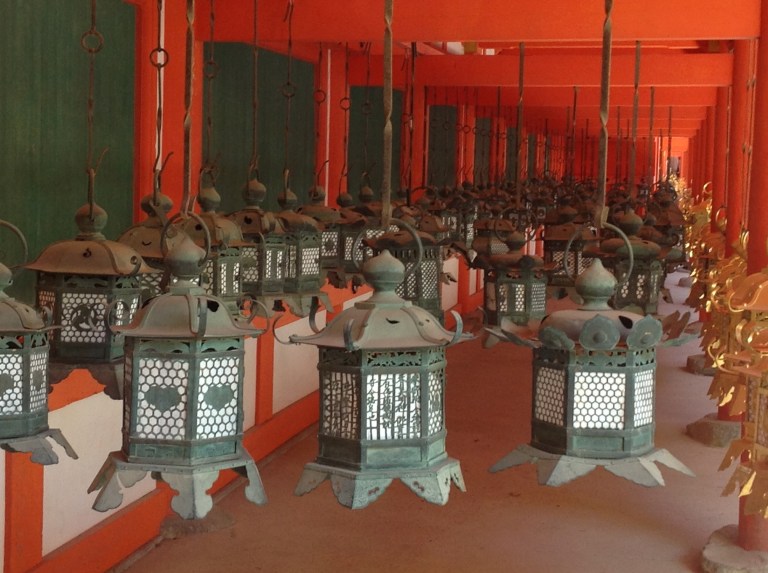
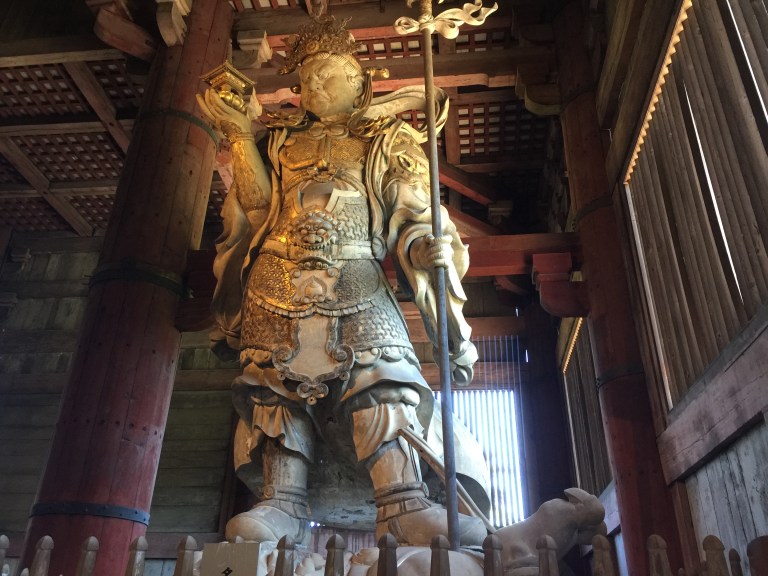
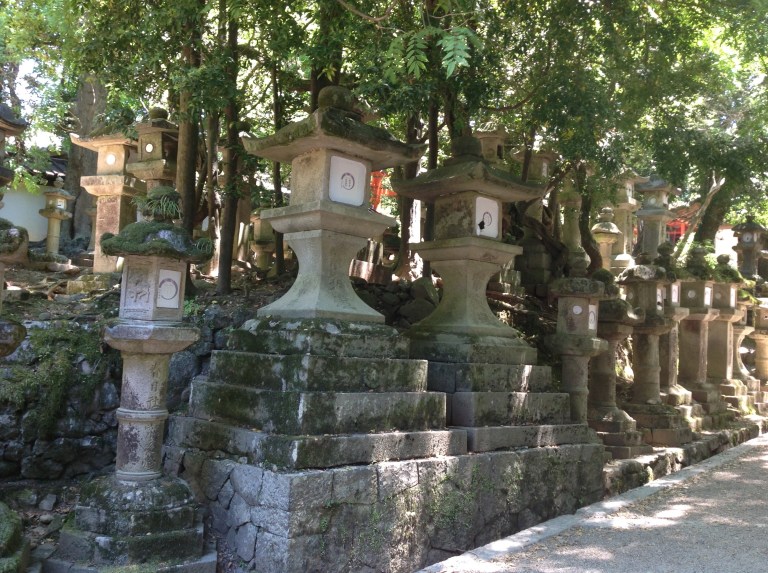
We also visited Japan’s most celebrated shrine, the Kasuga-Taisha. This shrine dates back to the first century and was torn down and rebuilt every 20 years until 1863. We strolled along an enchanting path to the Kasuga Grand Shrine, passing by 3,000 stone and bronze lanterns. The individualized lanterns were amazing. So far, this is my favorite Shrine. It has so much character and charm, and not so many scary statues as the Tadaiji Temple.
We returned to Kyoto and had a buffet lunch at a local restaurant near the Ritz. We walked back to the Ritz after lunch and had one hour of downtime before our next outing.
This afternoon we toured a section of Nijo Castle (not your typical image of a castle), a remnant from Japan’s feudal era. The “nightingale floors” would be enough to drive you mad if you had to listen to them squeaking all day long so I feel certain they were effective in alerting the occupants to intruders.
We had 2 lectures during cocktail hour this evening. Wade Davis-The WindHorse: Coming of Age in Mongolia and Sisse Brimberg-The Scythians.
We ordered room service for dinner so we could have a little down time before the early morning departure back to Big Blue for the flight to Mongolia. Of course, we had to order the Wagyu Steaks since we’re in the homeland of Wagyu Beef. And, they had a nice chocolate sampling from Pierre Hermé for dessert that I HAD to have.
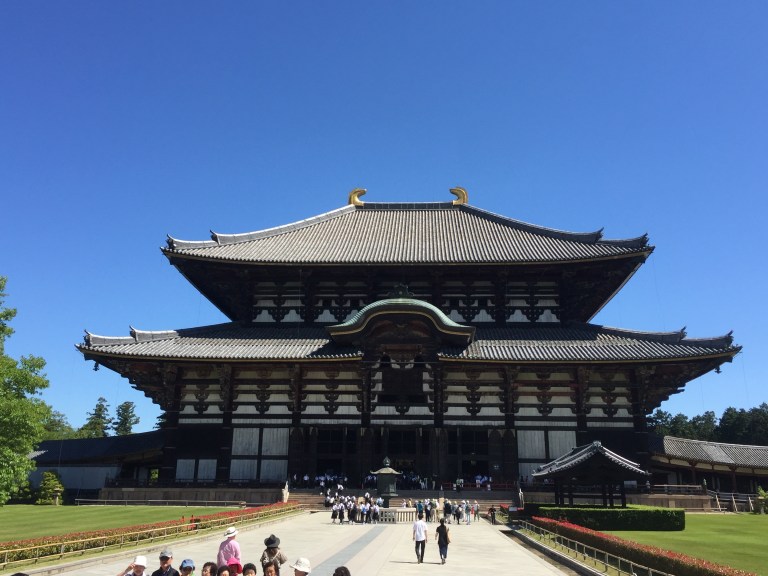

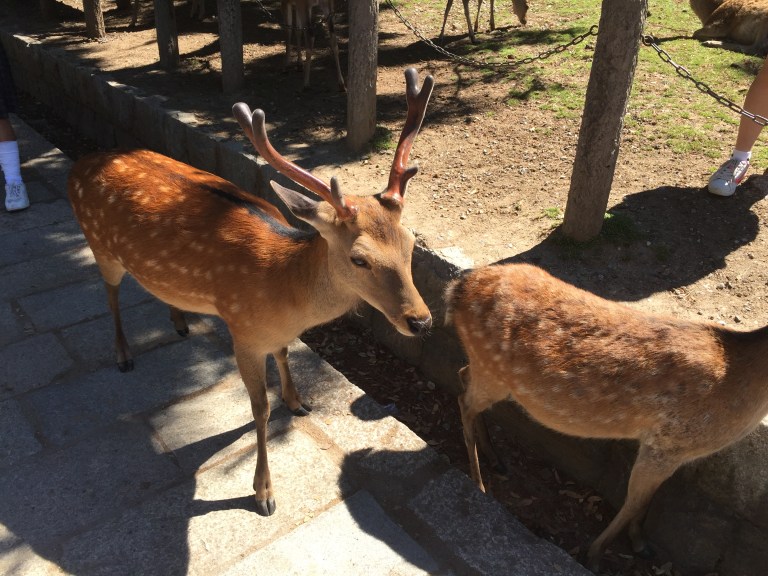
TODAIJI TEMPLE, NARA JAPAN
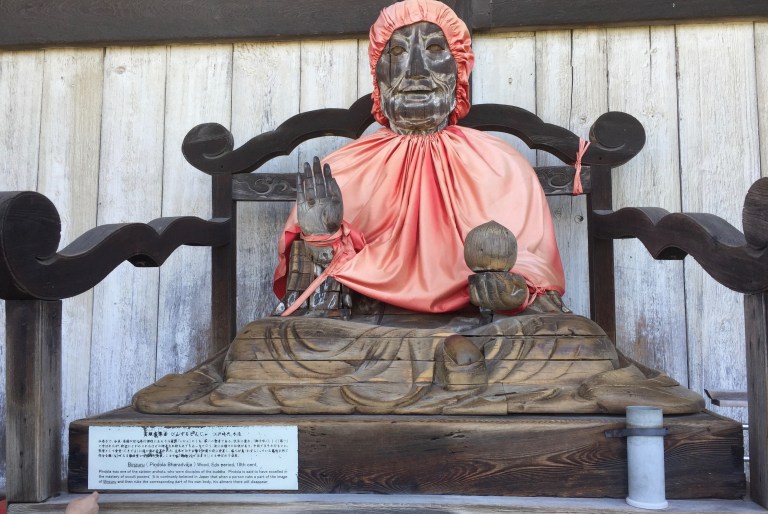
Todaiji (東大寺, Tōdaiji, “Great Eastern Temple”) is one of Japan’s most famous and historically significant temples and a landmark of Nara. The temple was constructed in 752. Todaiji’s main hall, the Daibutsuden (Big Buddha Hall) is the world’s largest wooden building, despite the fact that the present reconstruction of 1692 is only two thirds of the original temple hall’s size. The massive building houses one of Japan’s largest bronze statues of Buddha (Daibutsu) sitting at 15 meters tall.
A popular attraction for children is a pillar with a hole in its base that is the same size as the Daibutsu’s nostril. We saw several people trying to squeeze through it. It is said that those who can squeeze through the opening will be granted enlightenment in their next life. Along the approach to Todaiji stands the Nandaimon Gate, a large wooden gate watched over by two fierce looking statues that represent the Nio Guardian Kings.
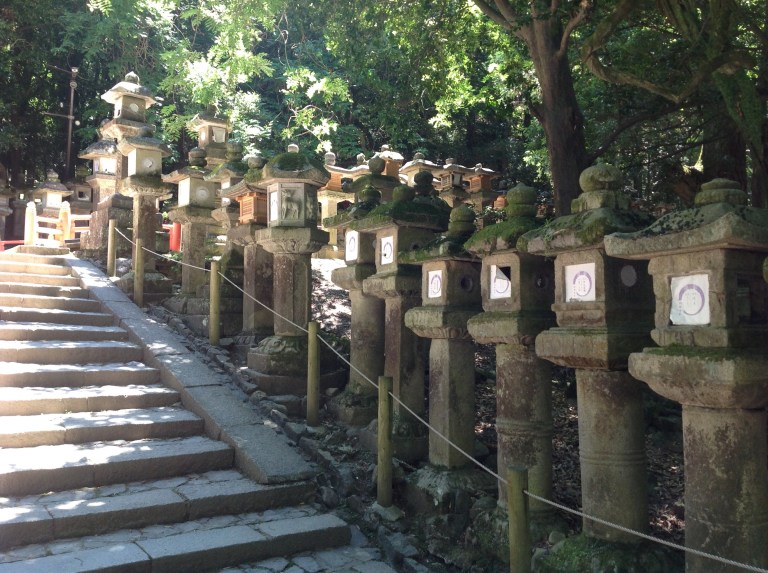
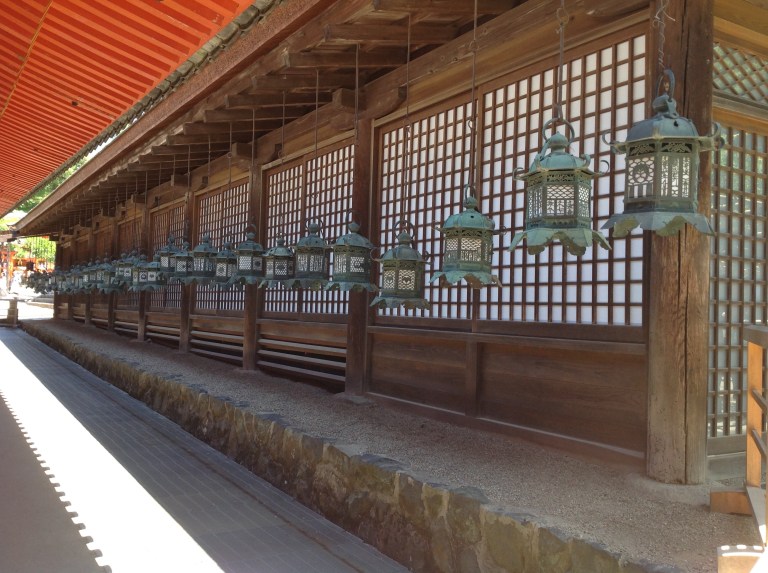

KASUGA GRAND SHRINE
Kasuga Taisha (春日大社) is Nara’s most celebrated shrine. It was established at the same time as the capital and is dedicated to the deity responsible for the protection of the city. Kasuga Taisha was also the tutelary shrine of the Fujiwara, Japan’s most powerful family clan during most of the Nara and Heian Periods. Like the Ise Shrines, Kasuga Taisha had been periodically rebuilt every 20 years for many centuries. In the case of Kasuga Taisha, however, the custom was discontinued at the end of the Edo Period. Beyond the shrine’s offering hall, which can be visited free of charge, there is a paid inner area which provides a closer view of the shrine’s inner buildings. Furthest in is the main sanctuary, containing multiple shrine buildings that display the distinctive Kasuga style of shrine architecture, characterized by a sloping roof extending over the front of the building.
Kasuga Taisha is famous for its lanterns, which have been donated by worshipers. Hundreds of bronze lanterns can be found hanging from the buildings, while as many stone lanterns line its approaches. The lanterns are only lit twice a year during two Lantern Festivals, one in early February and one in mid August. There are many smaller auxiliary shrines in the woods around Kasuga Taisha, twelve of which are located along a path past the main shrine complex and are dedicated to the twelve lucky gods. Among them are Wakamiya Shrine, an important cultural property known for its dance festival, and Meoto Daikokusha, which enshrines married deities and is said to be fortuitous to matchmaking and marriage.
Located a short walk from the Kasuga Shrine main complex is the Kasuga Taisha Shinen Manyo Botanical Garden. This garden displays about 250 kinds of plants described in the Manyoshu, Japan’s oldest collection of poems which dates to the Nara Period. A large part of the garden is dedicated to wisteria flowers which usually bloom from late April to early May. The shrine grounds also contain a Treasure House near the main complex which displays the shrine’s relics. These include two sets of large ornate drums. Additionally, the Kasuga Primeval Forest, a sacred old-growth forest belonging to the shrine, covers the mountain behind Kasuga Taisha, however, it is closed to the public.


NIJO CASTLE (二条城, Nijōjō)
The Castle was built in 1603 as the residence of Tokugawa Ieyasu, the first shogun of the Edo Period (1603-1867). His grandson Iemitsu completed the castle’s palace buildings 23 years later and further expanded the castle by adding a five story castle. Its palace buildings are the best surviving examples of castle palace architecture of Japan’s feudal era, and the castle was designated a UNESCO world heritage site in 1994. Surviving in its original form, the palace consists of multiple separate buildings that were detailed with nightingale floors that chirp melodically by design when walked on as a security measure against intruders. The palace rooms are tatami mat covered and feature elegantly decorated ceilings and beautifully painted sliding doors (fusuma).
 D. Kauten's Travel Blog