|
Irkutsk to St. Petersburg, Russia
Sunday, June 11, 2017
|
After breakfast, we returned to the airport at 8 a.m. for our flight to St. Petersburg.
Depart: Irkutsk, Russia 10:00 a.m. (we’re jumping a bunch of time zones again)
Arrive: St. Petersburg, Russia 11:05 a.m.
Elapsed Time: 6 hours, 5 min.
Meal Service: Lunch
We jumped back 5 hours in time so it’s going to be a LONG day! We deplaned in a private executive lounge upon arrival which was a fast and easy process.
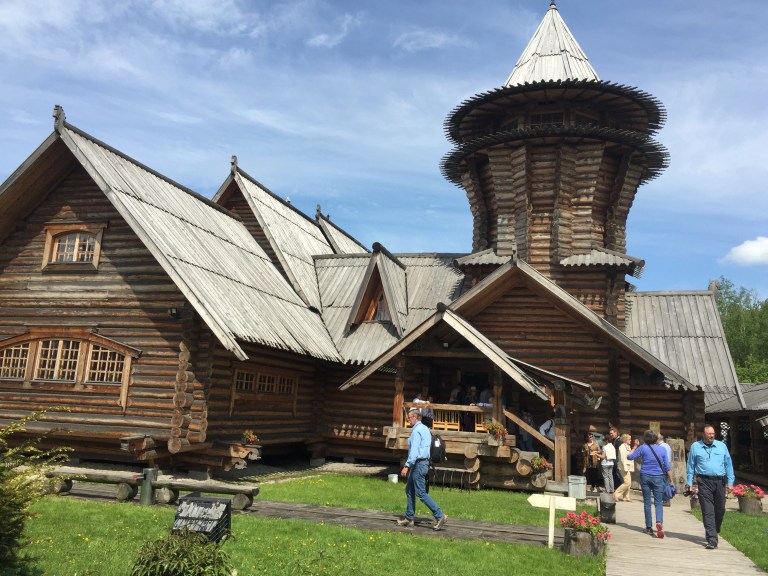
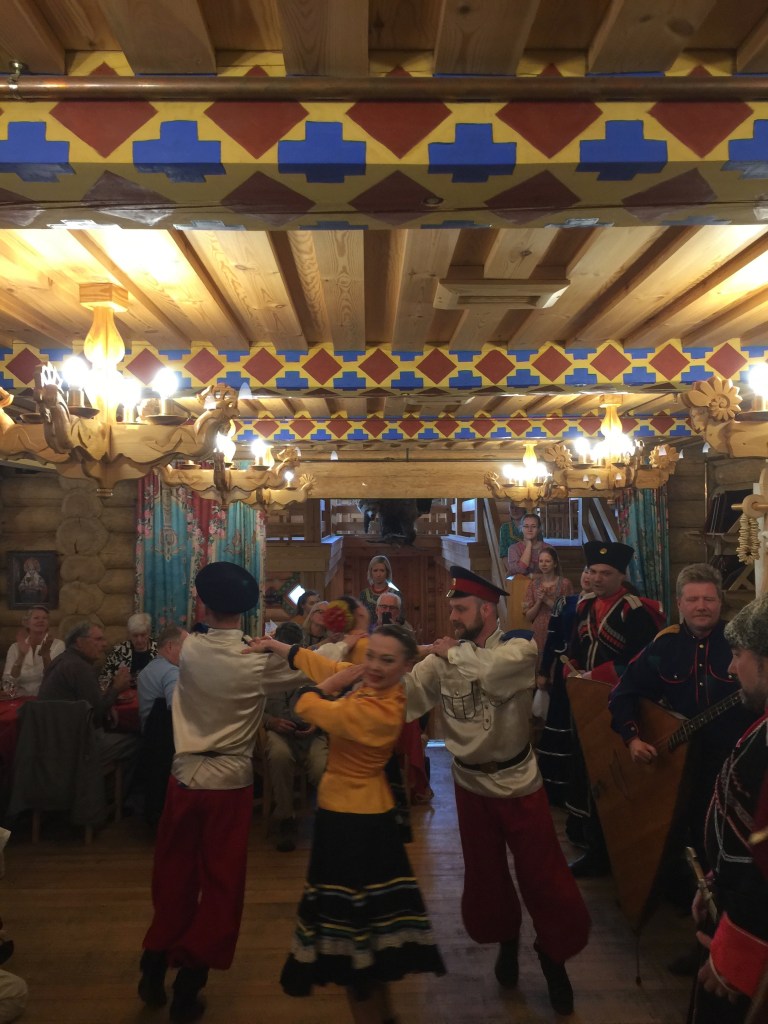
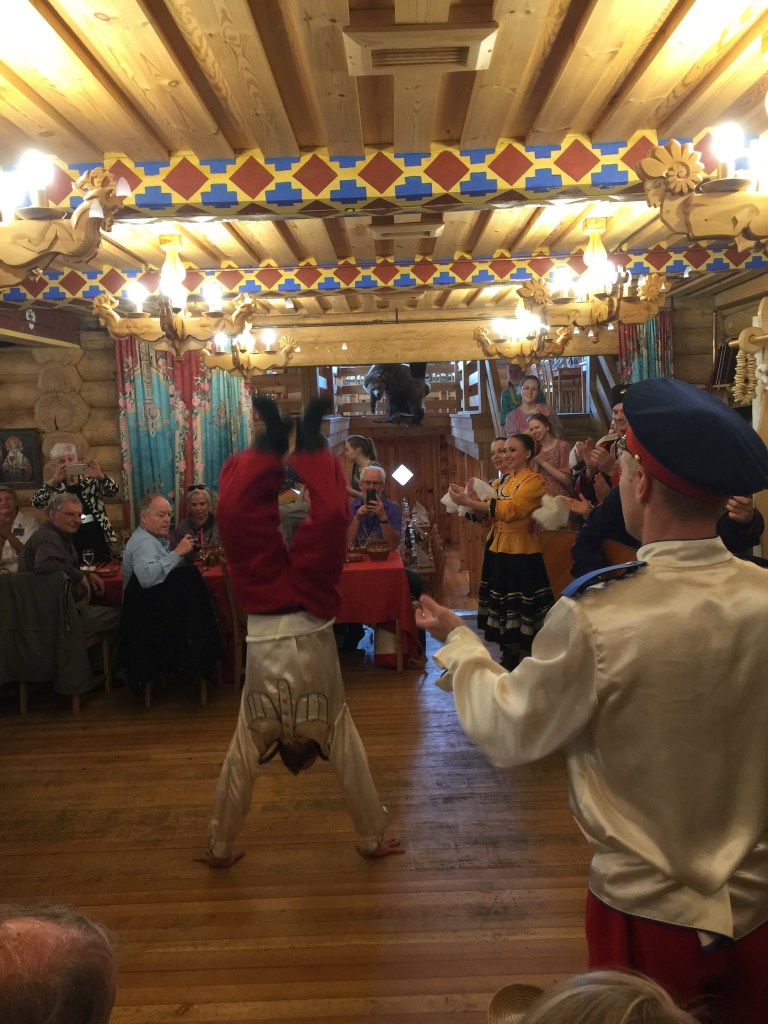
We traveled about 30 minutes to the little town of Pushkin for lunch at Dacha Terem restaurant. We had a delicious meal and finally got the Borscht soup that we have been craving. There was amazing entertainment during lunch by a Russian Cossack Folk Band. They performed some incredible songs and dances.
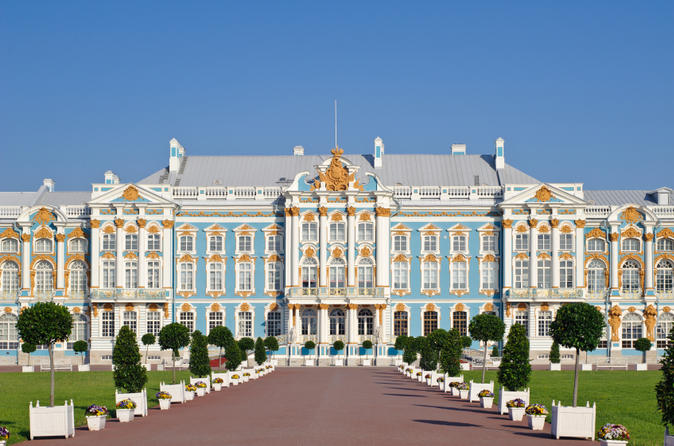
Afterward, we drove to the nearby town of Tsarskoe Selo to visit Catherine Palace, the former residence of the Russian tsars, and home to the incredible reproduction of the famous Amber Room.
It is the White Nights in Petersburg right now so it’s only dark from around 11pm til 3:30am. Although the phenomenon known as the “White Nights” is not unique to St. Petersburg, in no other northern city have they received such poetic and literary acclaim. What could be more romantic than a walk along the banks of the city’s rivers in almost broad daylight, no matter what the time of day? Apparently, the local custom during this time is to get up and go watch the raising of the bridges from the vantage of the water front, an operation that occurs every morning from 2-3 a.m. which allows incoming boats access to the waterways.
Our hotel is conveniently located near so many fabulous sites. St. Issac’s Cathedral is directly across the street. The Hermitage and Palace Square are less than a block away. We have the most amazing view of so many of the famous architectural wonders of St. Petersburg.
Evening Lecture: Panel Q & A with the experts
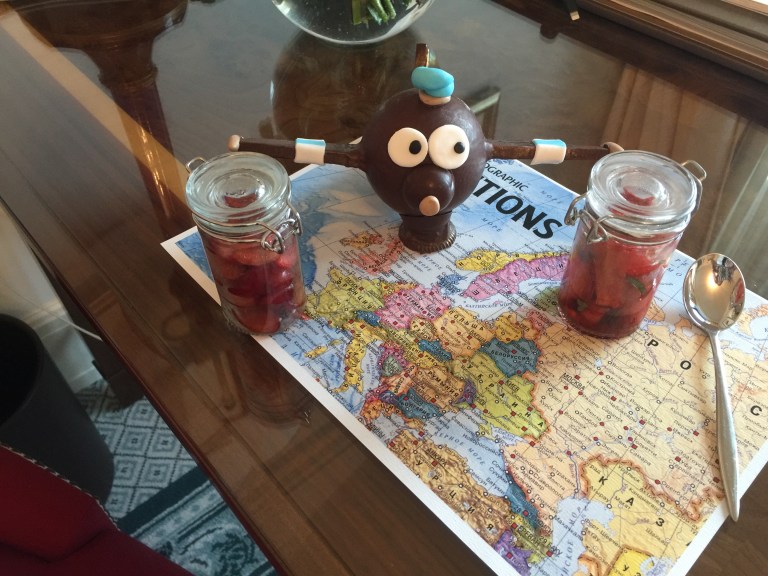
We had a Buffet dinner at the hotel. Yummy desserts here at the Four Seasons! We returned to our room to find the most amazing dessert. They had made a chocolate replica of our private jet and set it up alongside jars of cherries and strawberries.
Overnight: Four Seasons Hotel Lion’s Palace St. Petersburg, Room 506–AWESOME room!


CATHERINE PALACE
The Catherine Palace is named after Catherine I, the wife of Peter the Great, who ruled Russia after her husband’s death. Originally a modest two story building commissioned by Peter for Catherine in 1717, the Palace owes its awesome grandeur to their daughter, Empress Elizabeth, who chose Tsarskoe Selo as her chief summer residence.
The palace is nearly 1km in circumference, with elaborately decorated blue-and-white facades featuring gilded atlantes, caryatids and pilasters. In Elizabeth’s reign it took over 100kg of gold to decorate the palace exteriors, an excess that was deplored by Catherine the Great when she discovered the state and private funds that had been lavished on the building. The interiors of the Catherine Palace are no less spectacular. The so-called Golden Enfilade of state rooms, designed by Rastrelli, is particularly renowned and forms the focus of the palace tour including ornate banisters and reclining marble cupids. The Great Hall, also known as the Hall of Light, measures nearly 1,000 square meters, and occupies the full width of the palace so that there are superb views on either side. The large arched windows provide enough light to relieve the vast quantity of gilded stucco decorating the walls, and the entire ceiling is covered by a monumental fresco entitled The Triumph of Russia. Using similar techniques but on a smaller scale, the White Dining Room is equally luxurious but, like many of the rooms in the palace, its grandeur is softened by the presence of a beautiful traditional blue-and-white tiled stove in the corner. Other highlights of the Grand Enfilade include the Portrait Hall, which contains remarkably good portraits of both Catherine and Elizabeth, the Picture Gallery, in which almost every inch of wall space is covered with paneling comprising 17th and 18th century canvases and, of course, the legendary Amber Room. To create this extraordinary chamber, Rastrelli used the panels of amber mosaic originally destined for an Amber Cabinet at Konigsberg Castle and presented to Peter the Great by Friedrich-Wilhelm I of Prussia, and surrounded them with gilded carving, mirrors, more amber panels created by Florentine and Russian craftsman (comprising a total of 450kg of amber), and further mosaics of Ural and Caucasus gemstones. The room was completed in 1770. Due to the fragility of the materials used, a caretaker was employed constantly to maintain and repair the decorations, and major restoration was undertaken three times in the 19thcentury. The room was used to house a substantial collection of amber-work and Chinese porcelain. In 1941, when German troops took Tsarskoe Selo, the Amber Room was dismantled in 36 hours, and shipped to Konigsberg in a tawdry pretence at historical fidelity. As the Nazi war machine crumbled, the panels were crated up and moved out of danger, but their eventual fate is unknown. In 1982, the order was given to begin the recreation of the Amber Room, a process that took over 20 years and cost more than $12 million. Opened in 2003 by President Vladimir Putin and Chancellor Gerhard Schroeder, the restored Amber Room is a truly unique monument, and a testament to the painstaking care of the craftsmen who worked on it.
 D. Kauten's Travel Blog