|
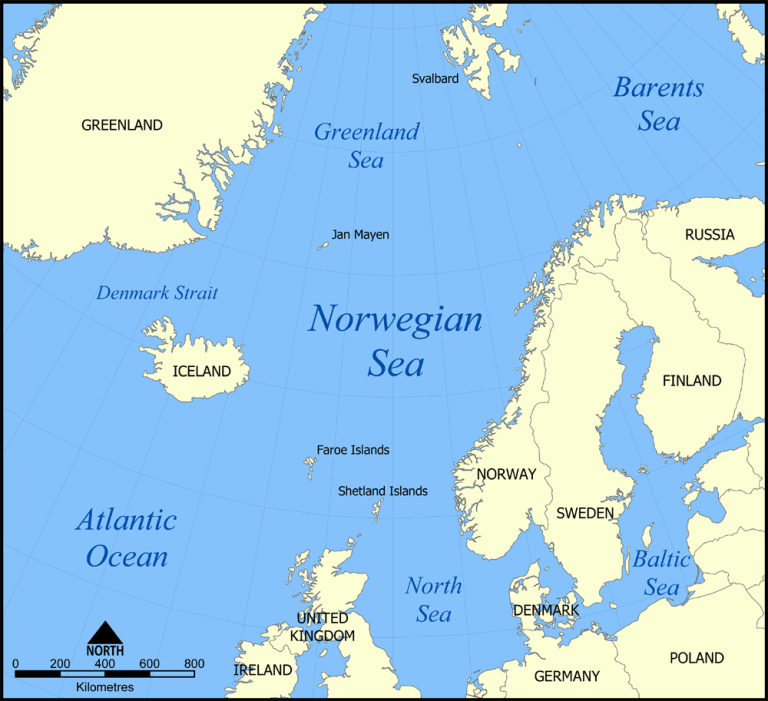
Norway to Iceland
Friday, June 16, 2017
|
We woke up this morning to the sounds of pouring rain outside our open windows. It’s so pleasant to listen to but certainly isn’t motivating me to get up and pack and get moving. There are clouds hanging low on the mountains and drizzly rain all across the fjord. Glad we got photos yesterday. We’re so sad to leave this beautiful, serene place. Would have loved to spend a few more days here. After breakfast we returned to the airport for our flight to Iceland. Sidsel is our guide on the way to the airport today. She’s fabulous and quite entertaining. She regaled us by telling us Troll stories, describing the 6 kinds of trolls they have in Norway and which is her favorite. Then she sang us a Troll song that they sing to their children at bedtime.
Depart: Ålesund, Norway 12:00 p.m.
Arrive: Reykjavík, Iceland 12:20 p.m.
Elapsed Time: 2 hours, 20 min.
Upon arrival, we went through fairly rapid airport procedures and then traveled to the LavaRestaurant at Reykjavik’s Blue Lagoon for lunch. Mediocre buffet style seated lunch. After lunch, we proceeded directly to the hotel– bathing in the Blue Lagoon’s hot spring did not look appealing at all to us–crowded and there’s a smell of sulphur in the air. So far, Iceland is a visual nightmare after being in the stunning vista’s of Norway. I’m drinking the vodka gifts they had in our hotel room to help me cope with the depression about being here and in a skanky hotel!
This evening, we had a guest lecturer, Jonina Olafsdottir, a Nat Geo young explorer grant recipient. She spoke on her studies of Pingvellir: Adventures, Exploration and Research on the Lower Floor. We walked over to Iōnó for dinner. During dinner we were entertained by a pianist and then the Icelandic Women’s Choir.
Overnight: Hotel Borg
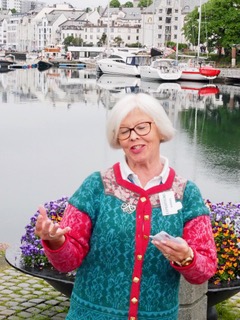
Sidsel, our fabulous guide in Norway

Welcome to Iceland gifts

Hotel Borg, Iceland

View from our room in Hotel Borg

Icelandic Women’s Choir
Reykjavík is the capital and largest city of Iceland and is located on the Seltjarnar Peninsula, at the southeastern corner of Faxa Bay, in southwestern Iceland. Reykjavík is the commercial, industrial, and cultural centre of the island. It is a major fishing port and the site of nearly half of the nation’s industries. Reykjavík’s manufactures include processed fish and food products, machinery, and metal products.
Reykjavik is the world’s northernmost national capital, and it’s also a compact, tightly organized city where you can walk nearly everywhere in a few minutes’ time. In fact, many of Iceland’s coolest shops and bars call one major street in Reykjavik home—Laugavegur, which means “Wash Road,” was once the route to the hot springs where many Icelanders took their clothes to launder. Now, this hyper-cool thoroughfare is a place where you can easily drop hundreds of dollars on clothes (and housewares, and accessories) at once. Think of it as a street that symbolizes an entire country. Within just a few blocks, you can get a wide sampling of what the innovative, surprising, and design-obsessed country has to offer. While you could easily spend all day traversing this hip street, here are the places you absolutely must know.
BLUE LAGOON
The Blue Lagoon (Icelandic: Bláa lónið) geothermal spa is one of the most visited attractions in Iceland. The spa is located in a lava field in Grindavík on the Reykjanes Peninsula, southwestern Iceland. The warm waters are rich in minerals like silica and sulfur and bathing in the Blue Lagoon is reputed to help some people suffering from skin diseases such as psoriasis. The water temperature in the bathing and swimming area of the lagoon averages 37–39 °C (99–102 °F). The Blue Lagoon also operates a research and development facility to help find cures for other skin ailments using the mineral-rich water. The lagoon is a man-made lagoon which is fed by the water output of the nearby geothermal power plant Svartsengi and is renewed every two days. Superheated water is vented from the ground near a lava flow and used to run turbines that generate electricity. After going through the turbines, the steam and hot water passes through a heat exchanger to provide heat for a municipal water heating system. Then the water is fed into the lagoon for recreational and medicinal users to bathe in.Iceland has a strict code of hygiene and guests are required to shower before bathing. The rich mineral content is provided by the underground geological layers and pushed up to the surface by the hot water (at about 464 °F ) used by the plant. Because of its mineral concentration, water cannot be recycled and must be disposed of in the nearby landscape, a permeable lava field. The silicate minerals is the primary cause of that water’s milky blue shade. After the minerals have formed a deposit, the water reinfiltrates the ground, but the deposit renders it impermeable over time, hence the necessity for the plant to continuously dig new ponds in the nearby lava field. A small experimental facility is still visible near the plant, where the engineers made decantation tests to evaluate the speed of mineral deposition, which is clearly a limiting factor both to the plant’s rentability and sustainability. Hence, geothermal energy exploitation at this location is not without environmental impact.
 D. Kauten's Travel Blog