Monday, February 19, 2018
With long hours of daylight, we’ll make the most of our days exploring the Antarctic Peninsula and surrounding islands. Our schedule will be kept flexible, allowing us to take advantage of the unexpected.
This morning we woke up well south of the 60th parallel. The wave movement by the boat is minimal and we look out at glassy calm seas and no winds.
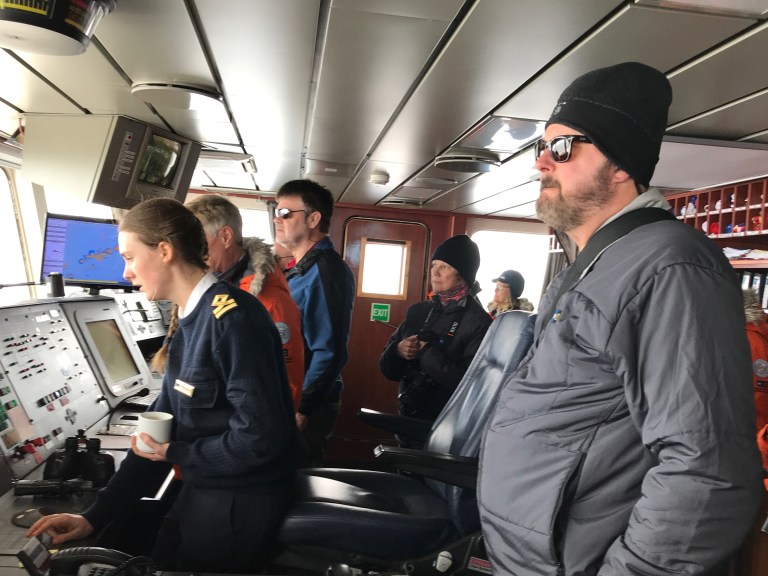
After breakfast, Conor Ryan (biologist) gave a lecture AN INTRODUCTION TO THE PENGUINS OF ANTARCTICA.
Then former USAP station manager, Eric Pohlman gave a lecture THE DISCOVERY OF THE PENINSULA (1777-1824): ANTARCTIC seals its fate.
We are approaching the South Shetland Islands, a formerly important seal ground that was heavily exploited in the 1800’s. Dozens of American and British sealing vessels exploited the large seal population and within 2 years the entire seal population had been almost entirely eliminated. Thankfully, the populations have now recovered well. We sailed between Robert & Greenwich Islands and through a small archipelago known as the Aitcho Islands.

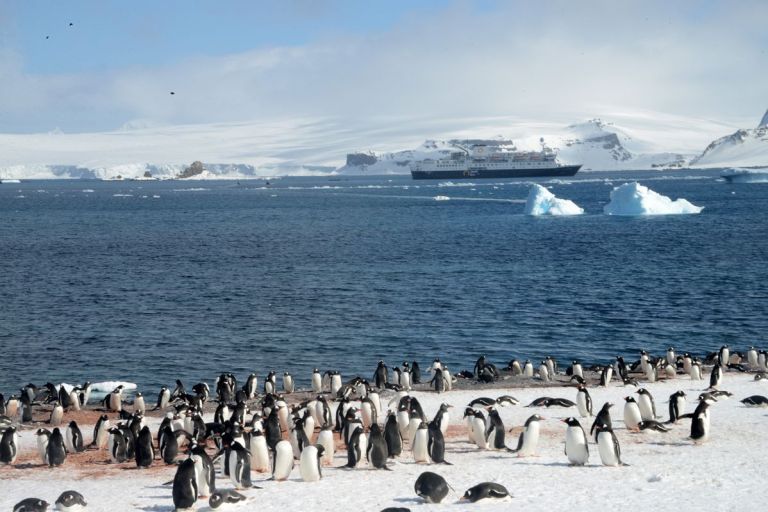
We made our first landing there on the penguin rich island of Barrientos. It was a first run on the Zodiacs so we were all excited. There were thousands and thousands of Gentoo & Chin Strap penguins everywhere. Hence, there was also penguin guano everywhere and it is highly malodorous. The baby penguins are molting now so we saw lots of penguin fur flying around. They are such cute animals and so curious. We hung out on the island with the penguins watching them carry on with their everyday lives for about 90 minutes. There are strict rules to stay out of their way and to avoid standing on their penguin “highways” that lead to the sea. Tour leaders put out cones to make sure passengers know to stay clear of the penguin paths. The point of the expedition is to disrupt their lives as little as possible so you must stay at least 15 feet away from them. However, penguins are curious creatures so if you stand very still while watching them, they walk right up to you and say hello.
Upon our return to the ship, we washed down our boots and poles and were greeted with celebration drinks. Champagne & Mimosa’s were the welcome-back drinks of the day today.
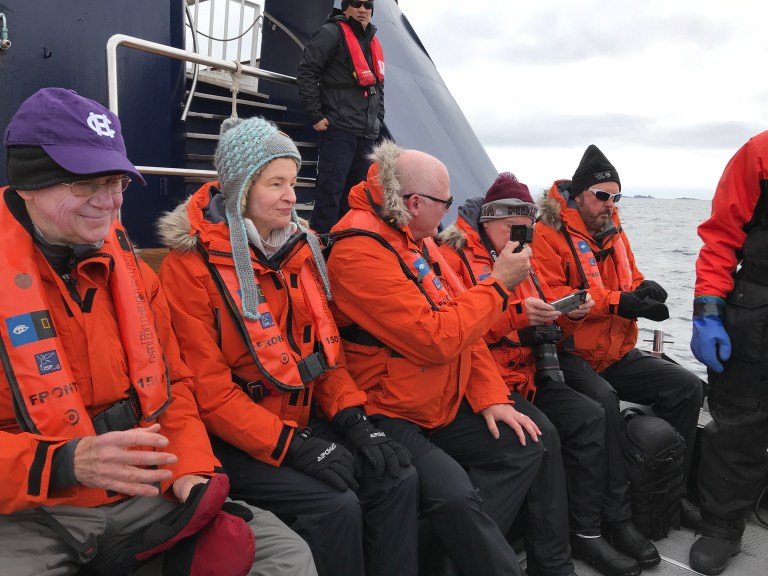
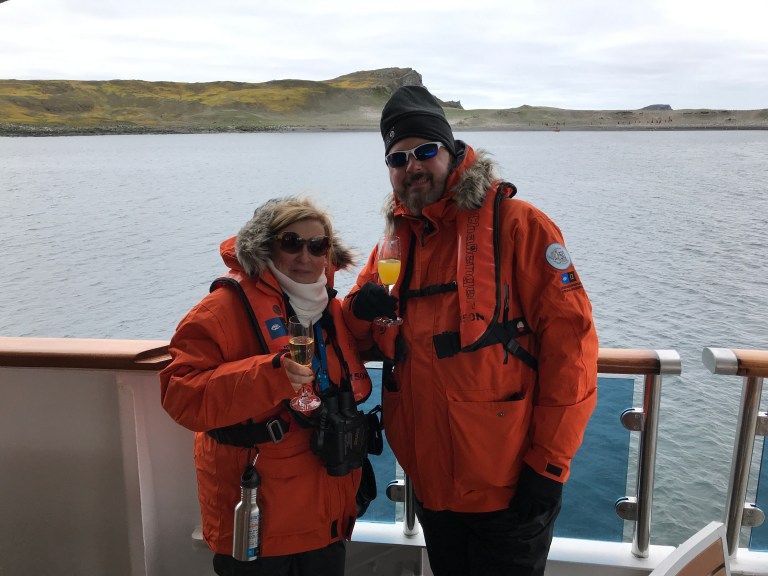
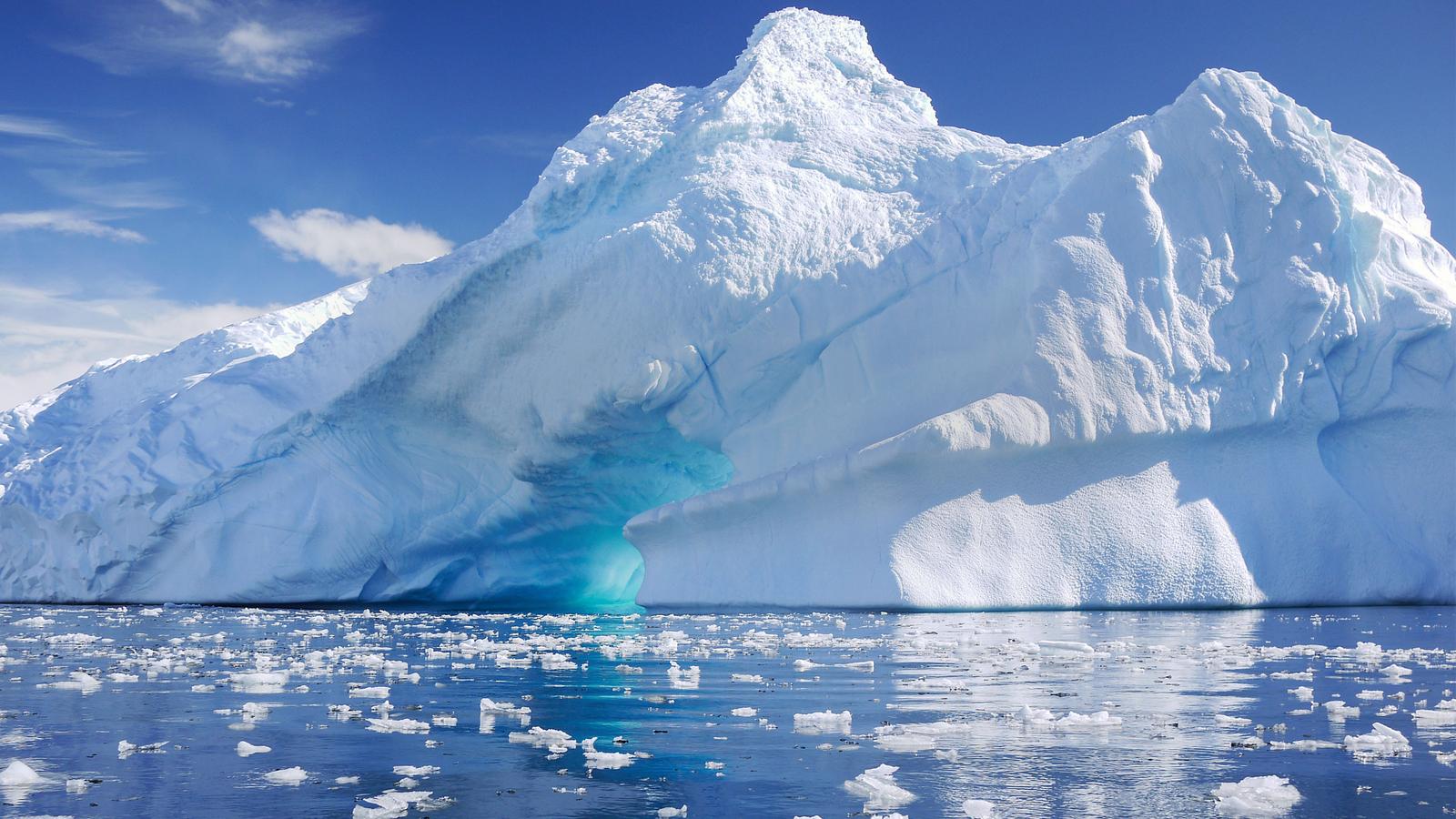
Just before lunch the captain announced that we were approaching icebergs. Everyone ran to the deck with their cameras. In addition to spotting the icebergs, we spotted 3 Minka whales, penguins and several birds.
At Cocktail Hour we had a daily review by the staff. Then we enjoyed another delicious dinner. The food has been great and the wait staff are wonderful. We always try to sit in Timmy With’s section…..there’s also a Timmy Without (he’s bald) but he’s on vacation. So funny…they love telling that story. Timmy is quite an entertaining and attentive waiter. What is most amazing to us is that after 1 day they know all of our names and what your favorite cocktails are.
We went out on an excursion after dinner tonight to Deception Island. It was very dusky as we left the boat and became quite dark shortly after we landed on the “beach.” There were several fur seals roaming about and we had to be very careful about not getting too close. They’re very aggressive and will charge you if they feel threatened. I got a close call with that when I walked toward a big seal that I didn’t see in the dark….he was not happy about the encounter! Turns out all you have to do is raise your arms and flap them and look larger than them and they turn and run. Who knew?!
Antarctica, fifth in size among the world’s continents. Its landmass is almost wholly covered by a vast ice sheet. Antarctica is the most remote and inaccessible continent. It has an average elevation of about 7,200 feet above sea level and is the world’s highest continent. (Asia, the next, averages about 3,000 feet.) Without its ice, however, Antarctica would probably average little more than about 1,500 feet. The vast ice sheets of East Antarctica reach heights of 11,500 feet or more in four main centers. Several ice-scarred volcanoes, many still active, dot the landscape.
Lying almost concentrically around the South Pole, Antarctica—the name of which means “opposite to the Arctic”—is the southernmost continent, a circumstance that has had momentous consequences for all aspects of its character. It covers about 5.5 million square miles, and would be essentially circular except for the outflaring, Antarctic Peninsula, which reaches toward the southern tip of South America (some 600 miles away), and for two principal embayments, the Ross Sea and the Weddell Sea. These deep embayments of the southernmost Pacific and Atlantic oceans make the continent somewhat pear-shaped, dividing it into two unequal-sized parts. The larger is generally known as East Antarctica because most of it lies in east longitudes. The smaller, wholly in west longitudes, is generally called West Antarctica. East and West Antarctica are separated by the 1,900-mile-long Transantarctic Mountains.
The continental ice sheet contains approximately 7 million cubic miles of ice, representing about 90 percent of the world’s total. The average thickness is about 1.5 miles. Many parts of the Ross and Weddell seas are covered by ice shelves, or ice sheets floating on the sea. These shelves—the Ross Ice Shelf and the Filchner-Ronne Ice Shelf—together with other shelves around the continental margins, constitute about 10 percent of the area of Antarctic ice. Around the Antarctic coast, shelves, glaciers, and ice sheets continually “calve,” or discharge, icebergs into the seas.
Because of this vast ice, the continent supports only a primitive indigenous population of cold-adapted land plants and animals. The surrounding sea is as rich in life as the land is barren. With the decline of whaling and sealing, the only economic base in the past, Antarctica now principally exports the results of scientific investigations that lead to a better understanding of the total world environment. The present scale of scientific investigation of Antarctica began with the International Geophysical Year (IGY) in 1957–58. Although early explorations were nationalistic, leading to territorial claims, modern ones have come under the international aegis of the Antarctic Treaty. This treaty, which was an unprecedented landmark in diplomacy when it was signed in 1959 by 12 nations, preserves the continent for nonmilitary scientific pursuits.
 D. Kauten's Travel Blog