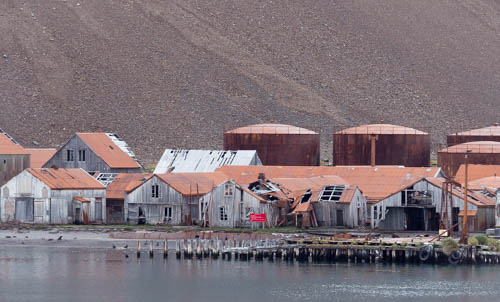
Stromness & Grytviken
“I go exploring because I like it and it’s my job.” — Sir Ernest Shackleton
This morning we awoke in Fortuna Bay to 50F temps, smooth waters and no wind. Should be a perfect day to explore and retrace Shackleton’s footsteps.
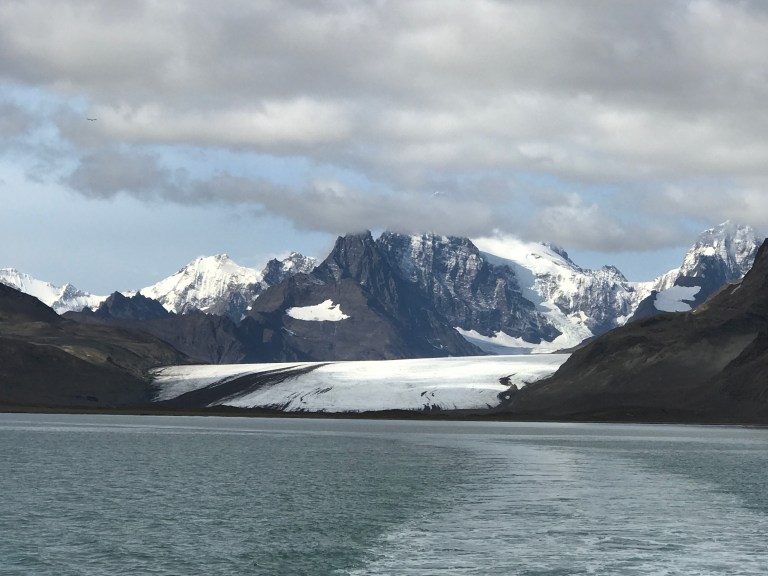
Experienced hikers are going ashore to retrace a segment of the treacherous hike that Shackleton made across the island. The ship is sailing around and into Stromness for the rest of us to disembark. Stromness is a former whaling and ship repair station, named after the three-mile wide body of water that must be passed through to reach the station. That name was applied presumably by Norwegian whalers who frequented its harbours. It is here that Shackleton arrived after a 36 hour hike across South Georgia to reach help and save his men on Elephant Island. The beaches and plains of the bay are rich in wildlife, including elephant & fur seals, king & gentoo penguins. Looking out our cabin window, we can see hundreds of penguins porpoising about and other birds feeding in the waters. Another Southern Right Whale was spotted as the ship was repositioning.
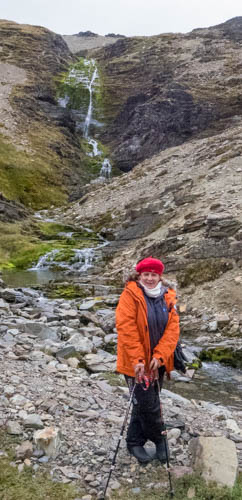
Upon arrival onto the shores of Stromness we took a hike to the Shackleton Waterfall. A bit of a challenging hike on rocky and boggy terrain all the while avoiding coming into contact with any aggressive adult seals.
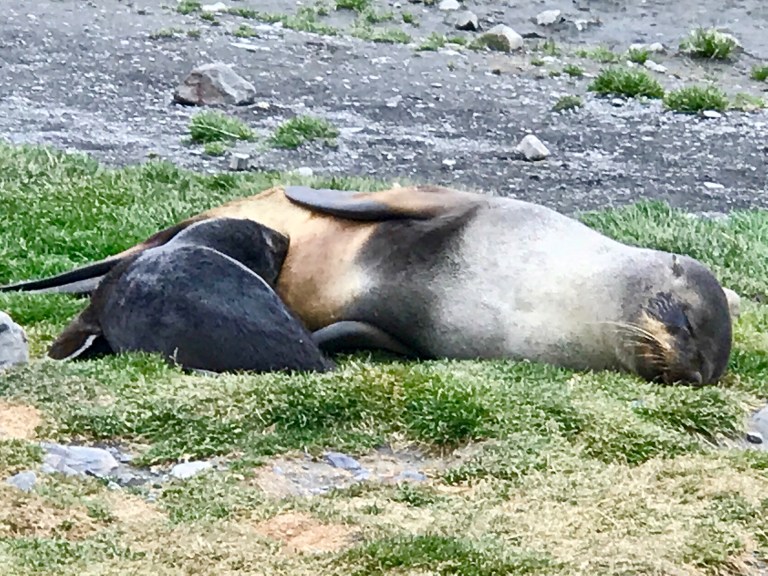
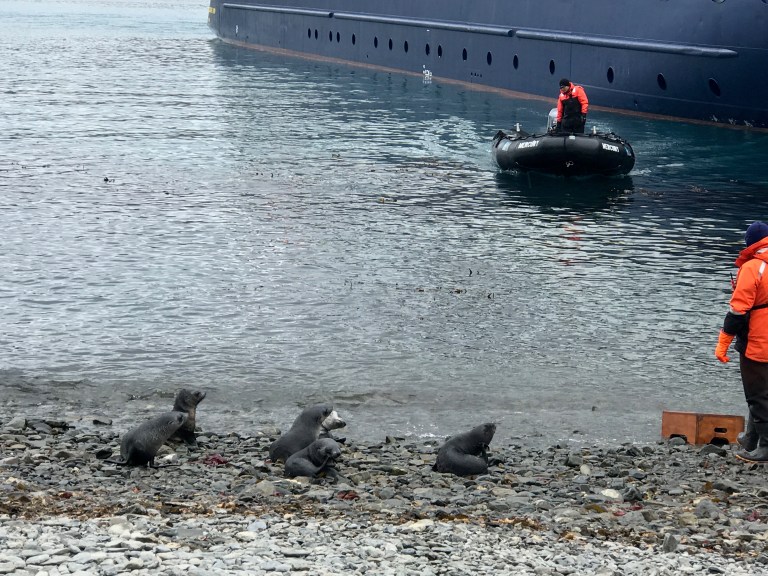
There are numerous seal pups running all about. These seal pups are much younger than what we’ve seen so far–their estimated age is 3-4 weeks. It is so humorous when they come running at us to bark and try to scare us….we bark back or raise our hands and they turn tail and run.
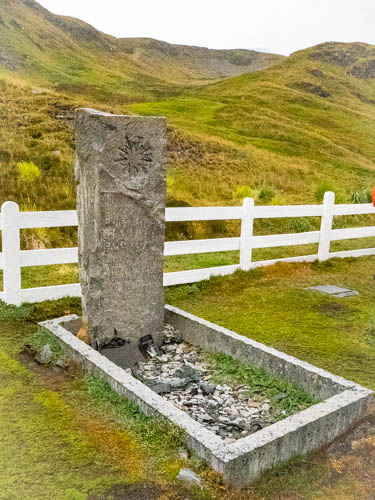
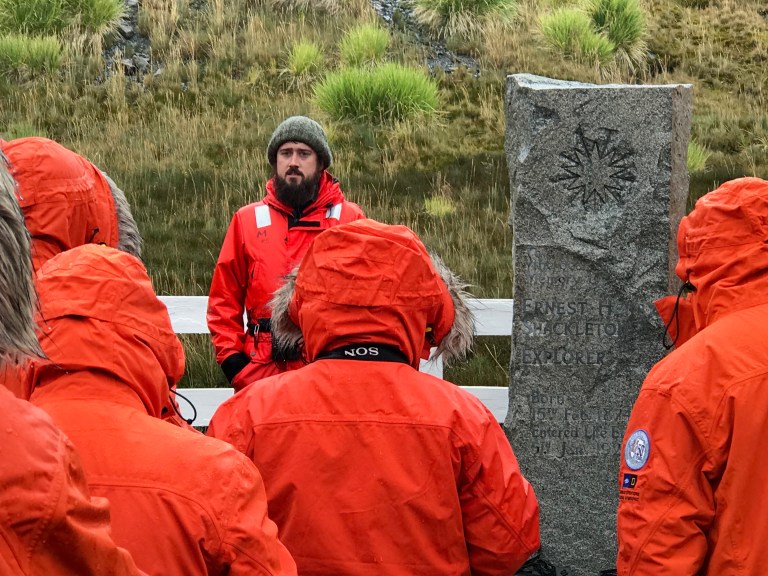
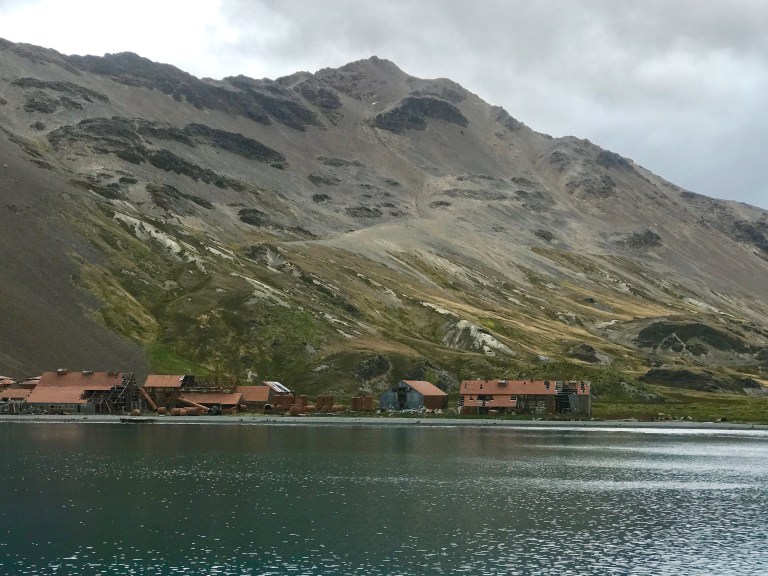
In the afternoon we sailed into the bay of Grytviken a former whaling station in 1904-05. The whaling factory is now a ghost town of rusting machinery and demolished buildings. The small cemetery just outside of town is the final resting place of Sir Ernest Shackleton, Prior to our disembarkation at Grytviken, one of the British staffers from the museum came on board the ship and gave a lecture about the weed and rat eradication efforts that they have ongoing on the island. Our shore landing was at the graveyard where we all payed our respects to both “The Boss” and the recently interred remains of Frank Wild by offering up toasts of Irish whiskey.
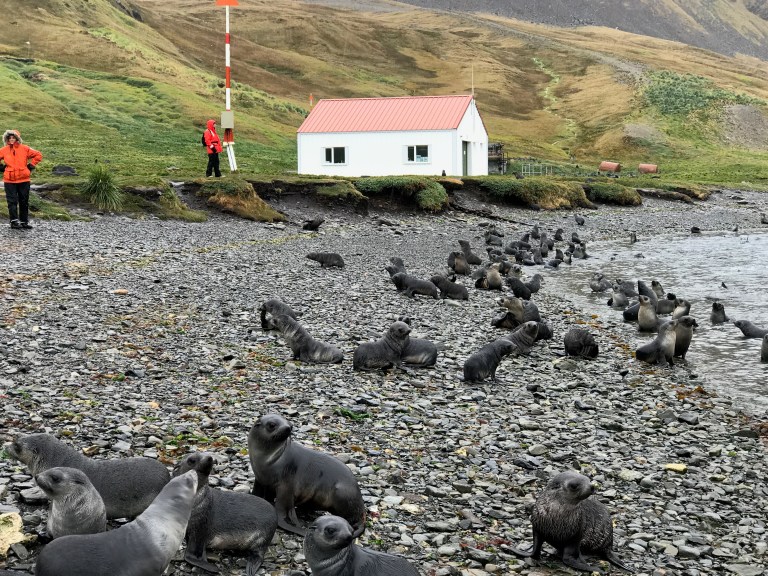
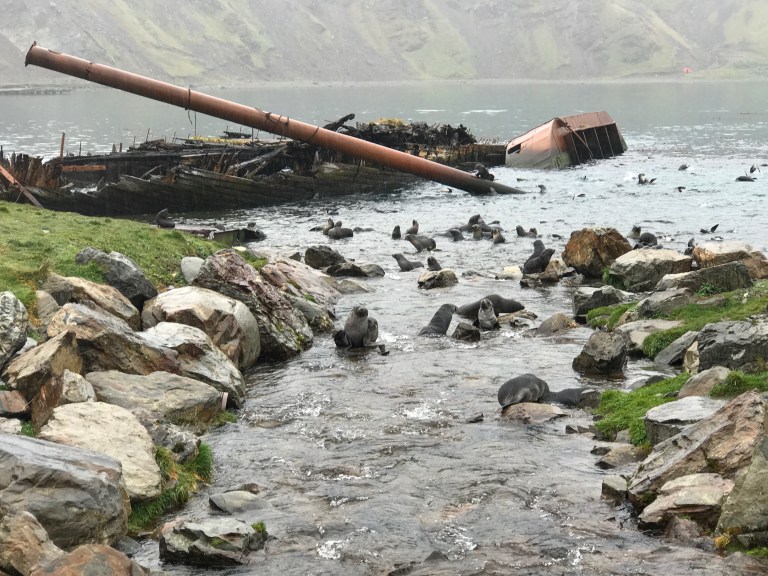
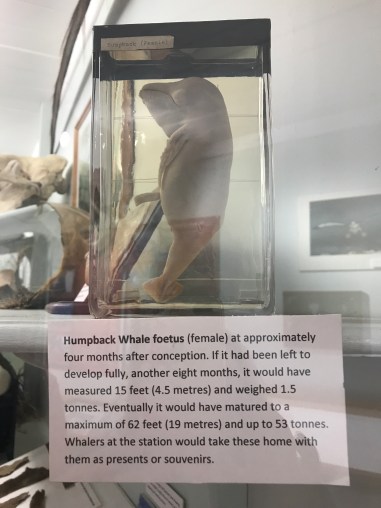
Then we went about exploring the former whaling station and the museum. The museum had wonderful displays about whaling, the history of South Georgia and many interesting artifacts. We really enjoyed seeing the replica of Shackleton’s boat and gear that he wore for his expedition. One unusual artifact was a Humpback whale fetus, that in the whaling days, the workers would take home as souvenirs. Gross! Watching the old video’s of whales being brutally slaughtered and dissected for whale oil was very disturbing.
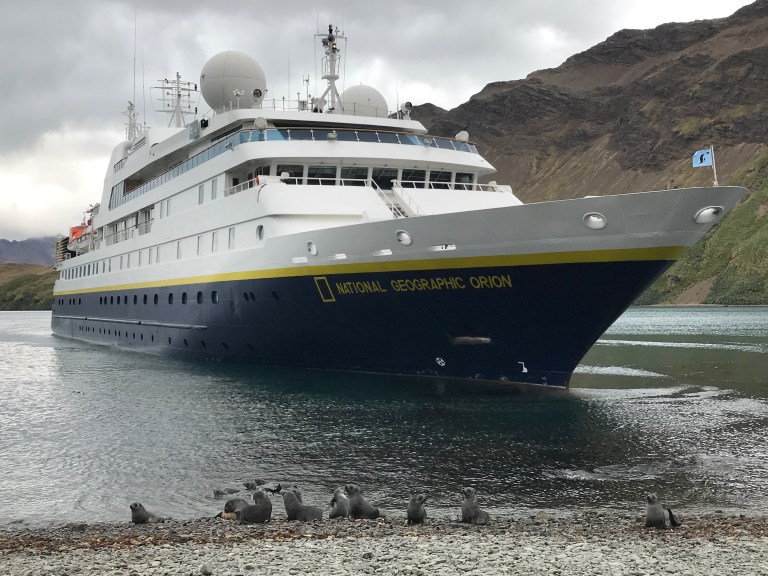
Tonight we had a seven course special Best of Britain Dinner. Zach, a young worker from New Zealand who’s been on Stromness island for 2 months working on eradicating invasive plant species, joined us for dinner. He has finished his work for the season and is hitching a ride to the Falklands with us. It was enjoyable to visit with him and hear about life in New Zealand and the work that his company performs in South Georgia. Eric, one of our Naturalist, joined us too. It was the first time we had dined with him. He has an interesting history too-naturalist side job and a banker full time in Colorado.
“Sir Ernest Shackleton – Heroic Failure?” The Irish-born explorer is famously connected with South Georgia and is buried there. Ernest Shackleton is famous for rescuing his men when his ship Endurance was crushed by ice in the Weddell Sea. However, this expedition to cross the continent of Antarctica was only one of four Antarctic expeditions that he took part in. He first went South on Captain Scott’s first expedition and then led his own expedition to attempt to reach the South Pole. He got within 100 miles before being forced to retreat by a shortage of food. After Amundsen and Scott had reached the Pole, Shackleton determined to cross the continent of Antarctica. He was foiled by the loss of Endurance. In 1922, Shackleton returned to the Antarctic aboard Quest but died of a massive heart attack on the day after he reached South Georgia, where he is buried.
 D. Kauten's Travel Blog