
Wednesday, March 7th, 2018 Sunrise: 0641/Sunset: 1944
West Point Island & Grand Jason Island
The Falkland Islands have a peaceful and rugged windswept beauty with ever-changing light and weather. We have loved our time in this magical group of islands literally in the middle of nowhere.
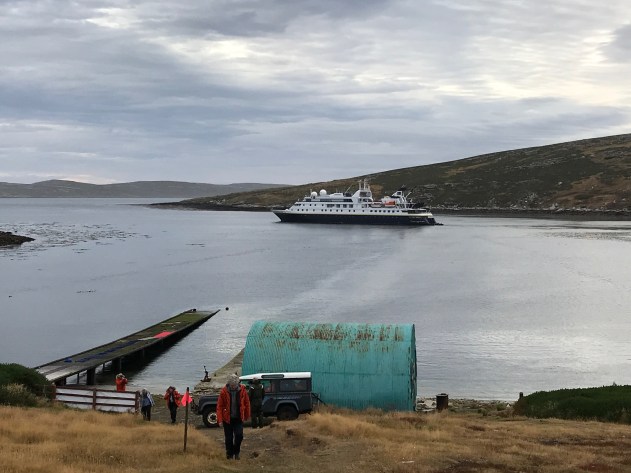
This morning, we set anchor in calm waters at enchanting West Point Island.
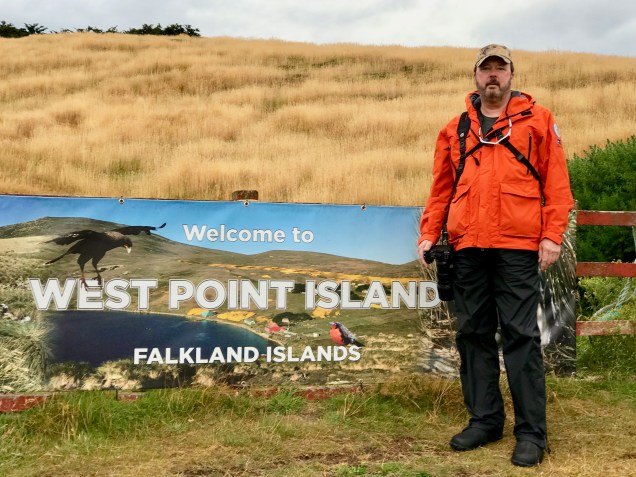
Lars Eric-Lindblad first travelled here in 1968. The landing is via Zodiac to a small dock. There is a small farm here and the only 2 inhabitants (husband/wife) of the island live here and manage 600 head of sheep and a small herd of cattle. They welcome multiple cruise ship passengers during the summer season granting them access across their farm to “Devil’s Nose.” Once ashore, we could hike or take a bumpy landrover ride over to “Devil’s Nose” on the opposite side of the island. I cheated and took the landrover ride! Walking in the clunky “damn boots” is exhausting and cumbersome.
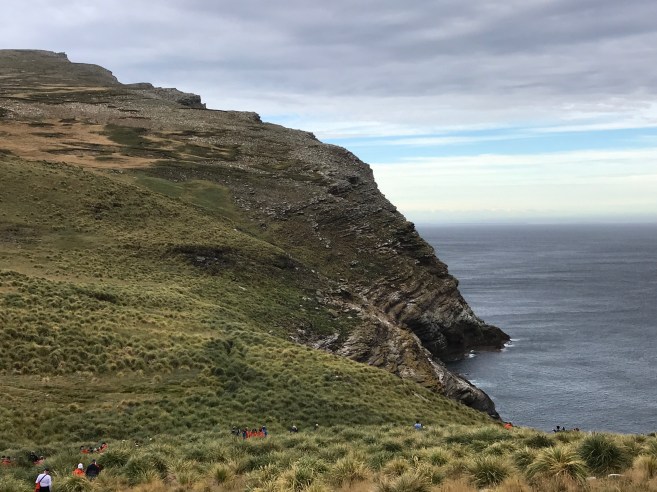
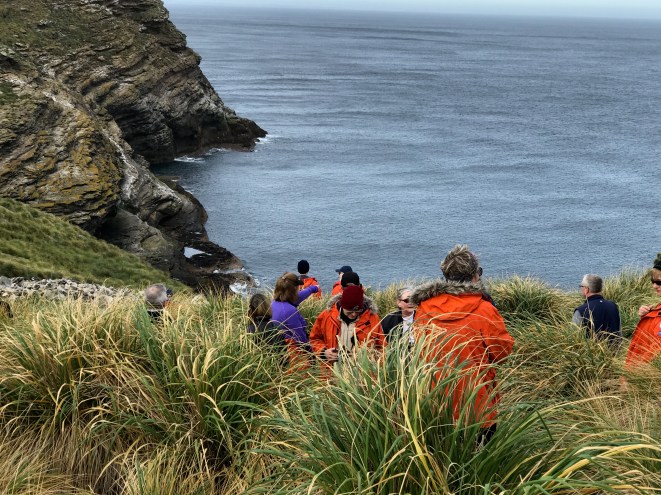
“Devil’s Nose” is a high rocky cliff lush with tussac grass mounds. Here we observed nesting black-browed albatross and a few rockhopper penguins. The vistas at Devil’s Nose is amazing. Access from below the cliff via watercraft is impossible.
There were numerous albatross chicks still in the molting phase in the rookery resting on their nests. Watching the mothers fly in and feed the screaming hungry chicks was incredible. I got some great videos of the process.
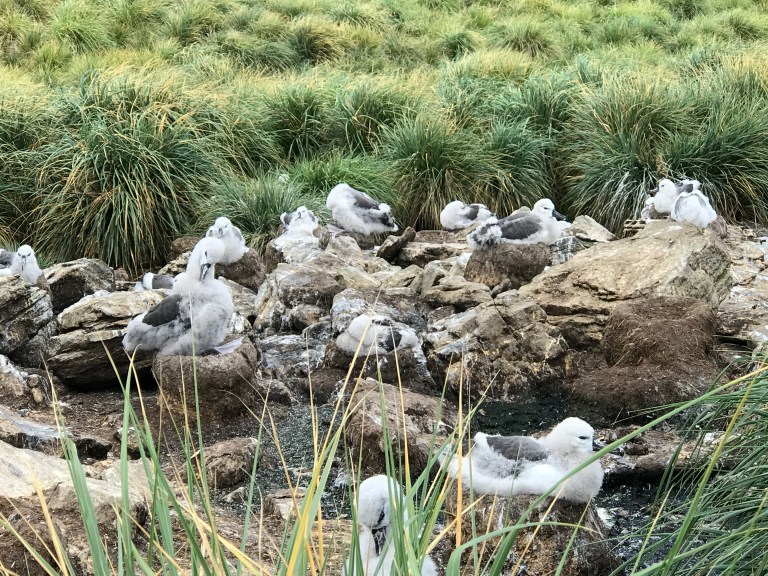
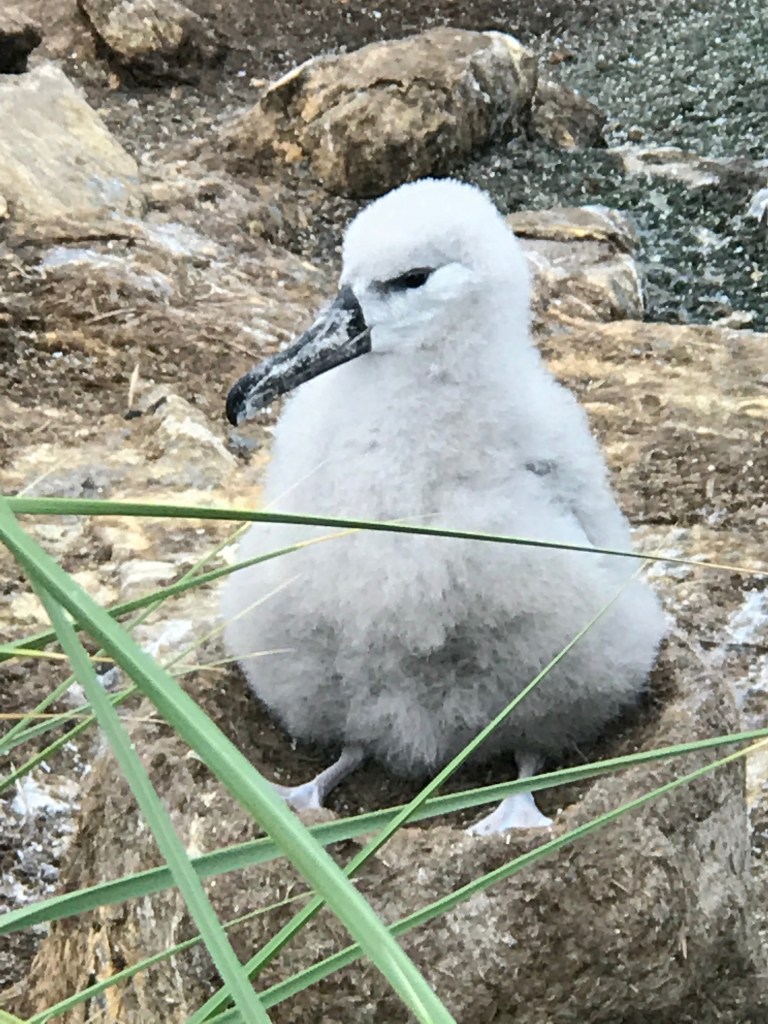
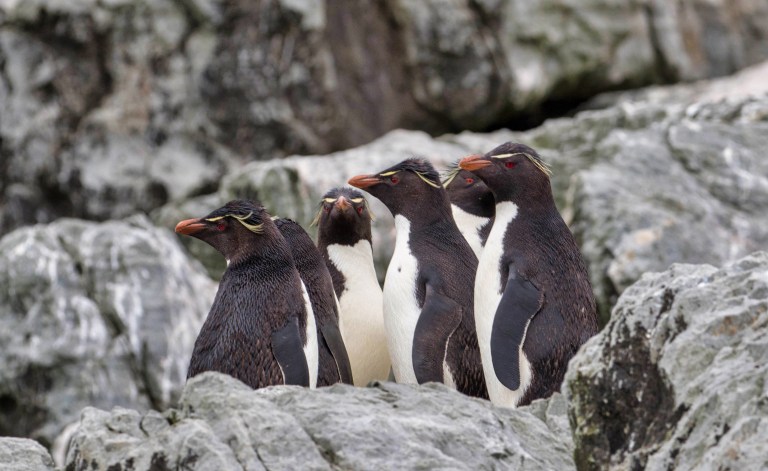
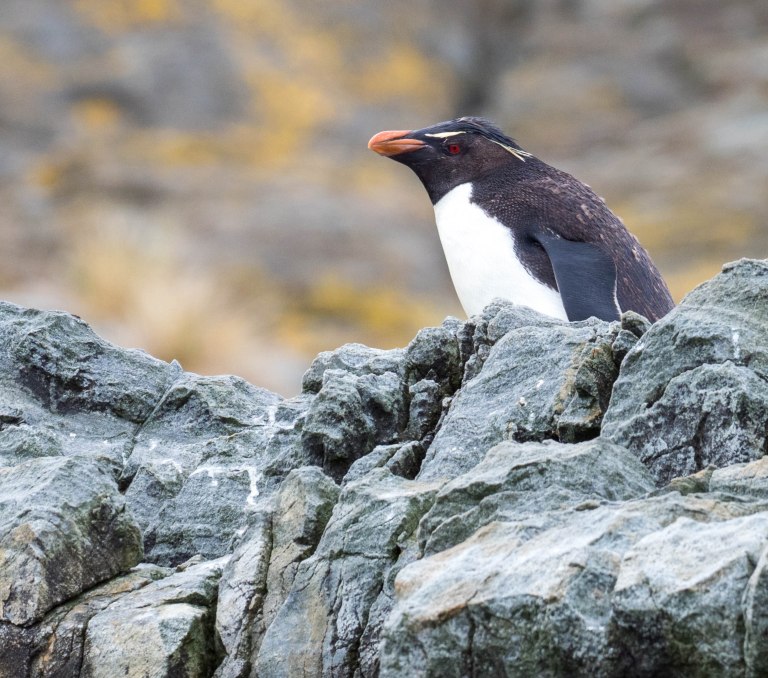
Late this afternoon we took a Zodiac tour along the shoreline of Grand Jason Island. We are very lucky to be able to visit this island, in that the weather rarely allows anyone access to the island. We’ve had picture perfect weather all day. We were able to spot innumerable Albatross nests and numerous different birds flying about. We also spotted a solo seal sunning himself on a rock. The Rockhopper Penguins are very shy so it’s challenging to get close to them. Shaun managed to maneuver our Zodiac back into a small rocky enclave where we spotted a group of 6-8 Rockhoppers and we were able to watch them hop about the rocks.
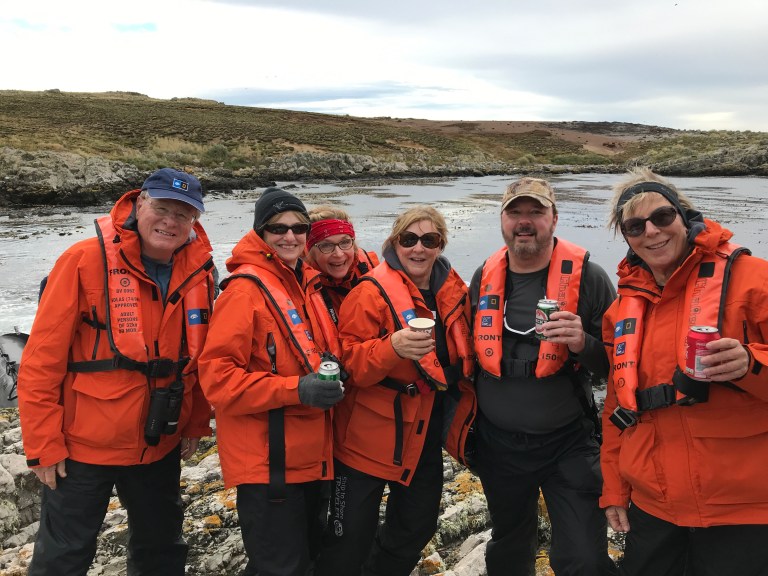
At the end of our Zodiac cruise we went ashore on treacherous rocky terrain to enjoy cocktails and a toast to our final Zodiac outing. Our wonderful hotel crew from the ship had set up a tent for our cocktail hour. We’ve had a fabulous last day in The Falklands.
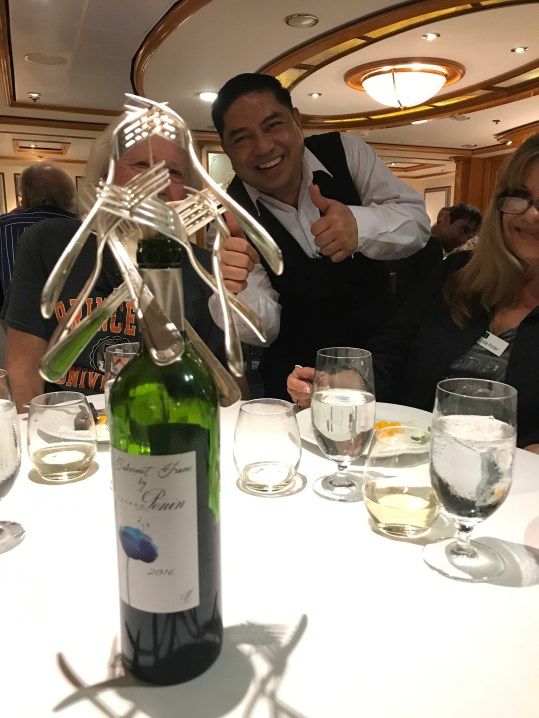
We had a short Recap & Briefing with the Expedition Team and then dinner. Teddy had perfected his fork trick for us after dinner and we had to get some photos of Teddy Whale with his art.
After Dinner, the videographer showed a preview of our Voyage Video Chronicle, a look back over our voyage of discovery with the Expedition Staff . Then there was Popcorn and an auction of crew art, the ship flag & a voyage chart, along with a special game of bingo to benefit the crew welfare funds for the National Geographic Orion. The Crew Welfare Fund raises monies for various endeavors including crew health issues, entertainment items for the staff headquarters, etc for the crew. It is a good way of showing our appreciation of the hard work, cheerfully undertaken by the crew, many of whom we never see. The Penguin band (i.e. our staff band) performed for a while for those who had enough energy to stay up.
Grand Jason is the largest in the Jason group of islands in the far, northwest corner of the Falklands archipelago. The island is named after the HMS Jason, the ship used by Captain John MacBride to establish the settlement at Port Egmont in 1766. The Jason islands have never had permanent settlement but have in past years been used for grazing ground for sheep. Since 1968, however, Grand Jason has had all livestock removed and is slowly returning to its native state. With no introduced rodents as well, the island has numerous ground nesting birds and a large and varied invertebrate population. The island is now owned by the Wildlife Conservation Society from New York.
Albatross Family: Diomedeidae There are thirteen species within the albatross family. They differ from petrels in having external nostrils displaced on either side of the culminicorn (upper mandible). There are two species of “great” albatross, the wandering and the royal. Mollymawks is the seafarer’s name given to another group of black backed albatross, such as the black browed, which are smaller than the great albatross. There are also four species of north pacific albatross and two species of sooty albatross. Albatross mature slowly with the large albatross not mating until their ninth or tenth year. The smaller albatross may begin to breed around year six or seven. The smaller species lay eggs annually, but the two great albatross nest every two years. In all species only one egg is laid. Both birds incubate and feed the chick. All albatross have large hooked bills made up of a number of horny plates. They feed mainly on squid. The ability of the parent to convert food and store it without deterioration is a tremendous advantage allowing the birds to travel over great distances and long periods on feeding flights.
 D. Kauten's Travel Blog