
Sunday, March 11th, 2018
We arrived back in rainy Atlanta at 5:30am from Santiago. It’s been a long trip but lots of fun and new and exciting experiences. We enjoyed so many of our fellow travelers on the trip and loved our Lindblad/Nat Geo staffers.
Things I’ve learned about Antarctica on this trip:
1. Penguin guano is VERY smelly. No one tells you that beforehand! Thousands and thousands of Penguins populate the continent.

2. Antarctica, the White Continent, grows bigger in the winter. Its the fifth largest continent. It is 1.5 times larger than the USA. Its sea ice expands about 40,000 square miles per day, adding up to an extra 12 million square miles of ice around the land mass (the equivalent of 1.5 United States). In effect, it doubles the size of the continent. In summer the new ice breaks up and melts. Antarctica is home to about 70 percent of the planet’s fresh water, and 90 percent of the planet’s freshwater ice.
3. It’s melting. If the West Antarctic Ice Sheet melted entirely, it would raise global average sea levels by 16 feet (5 meters), according to some estimates.
4. Nobody owns Antarctica. However, in January 1979, Emile Marco Palma became the first child born on the southernmost continent. Argentina sent Palma’s pregnant mother to Antarctica in an effort to claim a portion of the continent. Although a few nations, including Australia, Argentina, and the United Kingdom, have tried to lay claim to it over the years, it remains free of government and ownership. In 1959, the Antarctic Treaty was drafted, designating the land as “a natural reserve, devoted to peace and science.” 48 nations have signed the treaty.
5. Antarctica is the only continent without a time zone. The scientists who reside there go by either the time of their home land or the supply line that brings them food and equipment.
6. Antarctica is the coldest place on Earth. The annual average temperature is -58° F. And the lowest temperature ever recorded there was -128.5° F, in 1983.
7. Not only is it the coldest place, but it’s also the driest. The average precipitation is about 10 cm per year. Yet for all its dryness, Antarctica holds about 70% of the earth’s water… in the form of solid ice, of course. (That amounts to 90% of all the ice on the planet.) Antarctica’s Dry Valleys are where the combination of cold and dry is the most intense. It hasn’t rained there for more than 2 million years. The ground and climate so closely resemble the surface of Mars that NASA did testing there for the Viking mission.
8. There’s a lot of wind! On average, Antarctica is the windiest continent. So-called katabatic winds blow off Antarctica’s high interior toward the ocean and can reach speeds that qualify as hurricane-strength — up to 200 mph.
9. There are no permanent residents in Antarctica. The only people who live there are visiting scientists. During the summer, the number averages about 5,000. In the winter, it drops to 1,000.
10. There are buried mountains. Antarctica’s Gamburtsev Mountains are a range of steep peaks that rise to 9,000 feet and stretch 750 miles the interior of the continent — and are completely buried under up to 15,750 feet of ice. The Transantarctic Mountains divide the continent into East and West sections. At 2,175 miles long, the Transantarctic range is one of the longest mountain ranges on Earth.
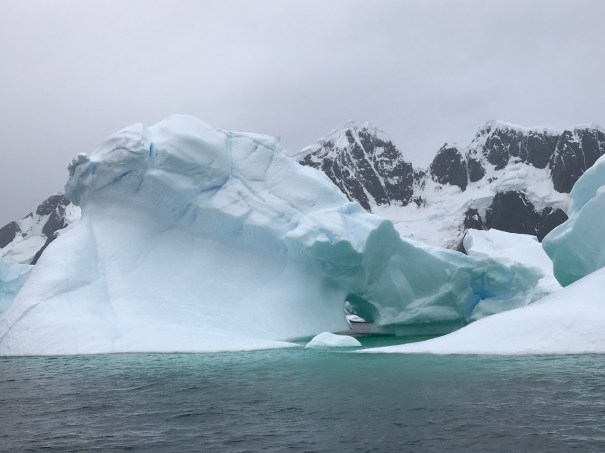
11. Icebergs are really big in Antarctica. The ice is thick. The average thickness of Antarctic ice is about 1 mile. In 2000, one of the biggest icebergs ever recorded broke free from the Ross ice shelf. It was 183 miles long and 23 miles wide, with a surface area of 4,250 square miles above water – and 10 times bigger below. Imagine if Connecticut was solid ice. In July 2017 a 22 square mile, Delaware-sized section of the Larsen C Ice Shelf broke off.
12. It has an active volcano. Antarctica is home to Mount Erebus, the southernmost active volcano on the planet and home to Earth’s only long-lived lava lakes.
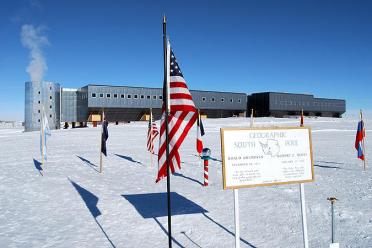
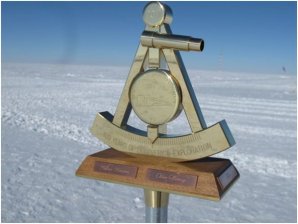
13. It is home to the South Pole. Antarctica is, of course, home to the geographic South Pole, the spot where the Earth’s (imaginary) rotation axis would intersect the surface — at least, it is usually. There is some wobble in Earth’s orbit, so the location is not always a precise one.
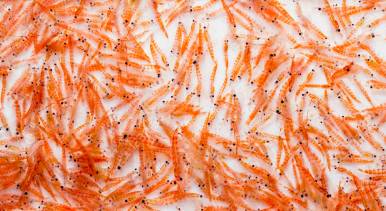
13. All Antarctica sea life is dependent on the tiny little Krill. Euphausia superba krill are the most common krill, found mostly in the waters of the Antarctic. Euphausia krill are at the very bottom of the food chain and can only be found in the pristine oceans around Antarctica, where there is very limited accumulation of contaminants.
Antarctica changed me forever by reminding me that there are places still unadulterated, unfettered by human impact and where there are no cell phone towers in sight!
 D. Kauten's Travel Blog