
Now that we have a daylight view from our hotel room on the 16th floor, we are able to view the beautiful Basilica church in the distance as well as the Winged Virgen of Quito statue. After breakfast we met our guide, Florencia, and our driver, Juan, for our Quito tour. We are enjoying the cool 60 degree temperature and no humidity. Although nearly on the equator, Quito’s altitude keeps it relatively temperate. Hardy survivors of earthquakes and volcanic eruptions, Quito’s 500-year-old buildings are ensconced in a long, narrow valley at the foot of the restless Volcán Pichincha. This sprawling metropolis of 1.4 million people lies only 15 miles south of the equator.
We began our tour at Mercado Central Market. There were many sights to behold. In addition to the fruits, vegetables and flowers in the market we also saw cow stomachs, hooves, and pigs heads for sale.
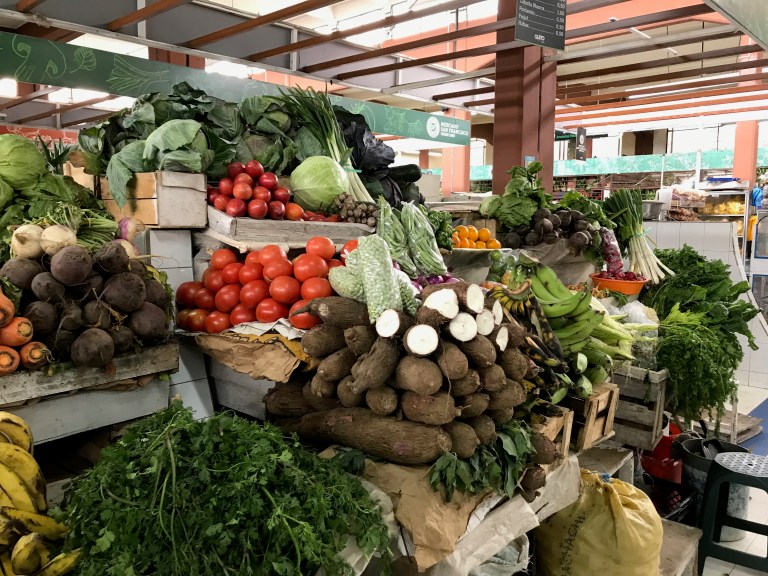
We were surprised to see hominy booths selling hot steamed hominy. It is a very popular vegetable in Ecuador.

We also watched as one of the Ecuadorean ladies prepared a hangover “smoothie” for a local who had partied too much last night. I’m not convinced he’ll feel better after drinking the concoction consisting of alfalfa juice, a raw egg and beer. Nestled within the herb stalls are herbal healers who treat a variety of ailments with remedies blended from their herbs and tinctures. Sra, Rosa Mercedes Lagla Correa is a very popular herbal healer at the market.

At one of the stands, we enjoyed a piece of fruit from the Passion fruit family, Granadilla, which was quite delicious.
Then we ventured to Old Town where there are cobbled colonial streets, handsome old churches and wonderfully preserved colonial-style buildings. It was declared a World Heritage Site by UNESCO in 1978 — the first city to earn the designation. Within Plaza Grande (the main square) square sits the white neo classical Presidential Palace (which shockingly to us was not tightly guarded).
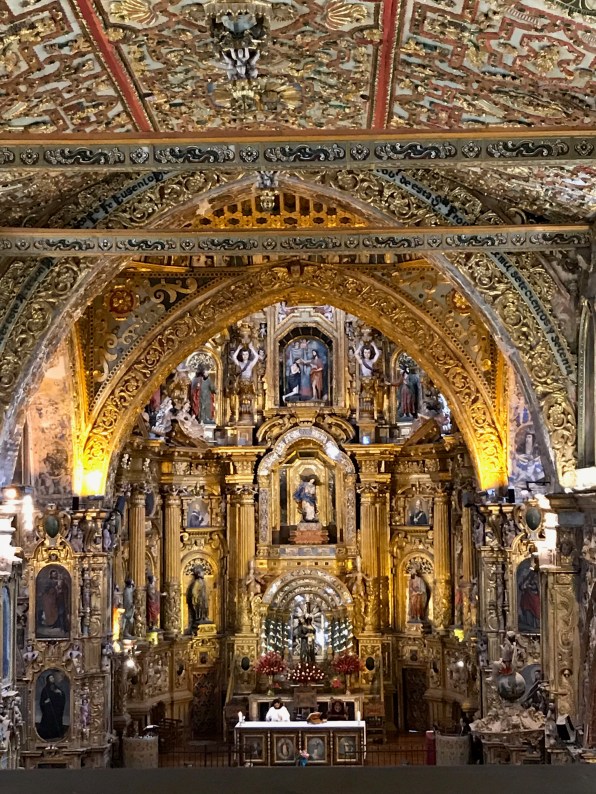
We walked about the area and toured Iglesia de la Compañía Jesús often called The Golden Church, a baroque church dating back to the time os Spanish Conquistadors and Incan warriors. It is profusely decorated with gold leaf and gilded plaster. The wood fresocoes throughout the church are quite beautiful. Then we quietly entered the Convento San Francisco while mid-day mass was being conducted. It is an imposing monument consisting of the temple, a series of chapels and a convent.
New Town is a lively cosmopolitan area. It may be the capital of Ecuador, but it’s actually the second-most populous city in the country (after Guayaquil). However, it is a major transportation hub, so most visitors begin and end their trips to Ecuador here. Quito is also surrounded by several volcanoes. We can see Cotopaxi, the 2nd largest active volcano in the world from our hotel room.

To wrap up our day we drove up El Panecillo, a large rounded hill to view the impressive statue of the winged Virgen of Quito and to enjoy the panoramic view of the city below us.
For lunch Jim enjoyed the refreshing ceviche — a very popular dish in Ecuador. We were surprised to learn that Ecuadorians garnish their ceviche with popcorn or plantain chips. After lunch we walked a block from our hotel to walk about the Mercado Artesanal market being careful to be back in our hotel before dark at 6pm. We’ve been warned repeatedly about pick pockets and kidnappers while walking about town and especially not to be out after dark.
 D. Kauten's Travel Blog