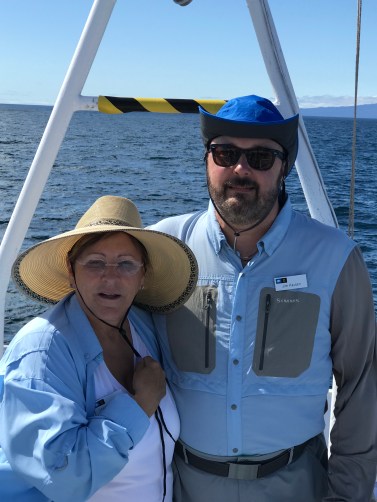
We started our Anniversary day by sailing over the equator at 8:45am on our way to Fernandina Island. We grabbed a photo on the front of the boat as it sat on the Equatorial line.
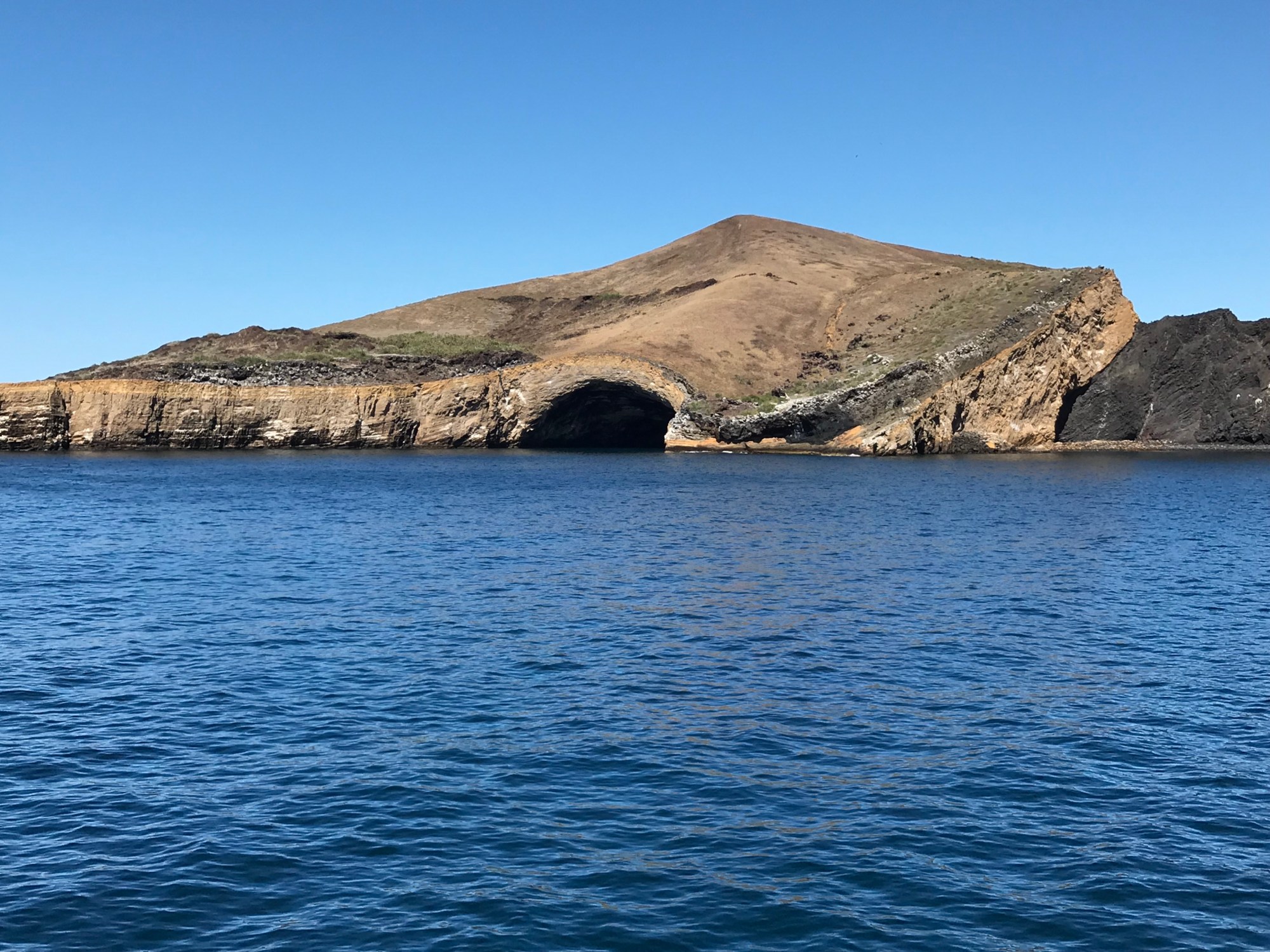
There we embarked on a zodiac cruise of Punta Vincente Roca. We cruised along the shore line and into a wide cave.
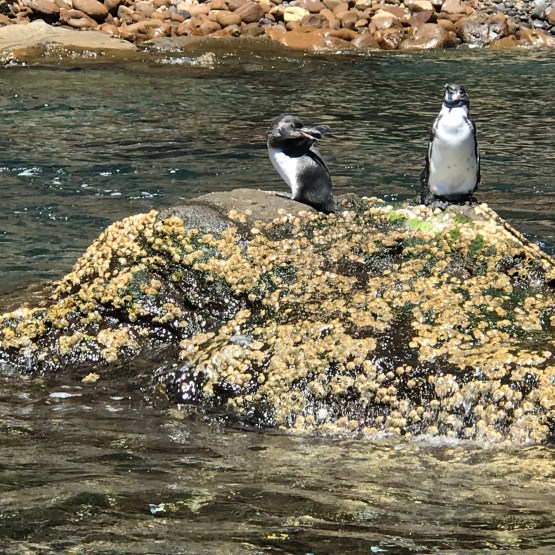
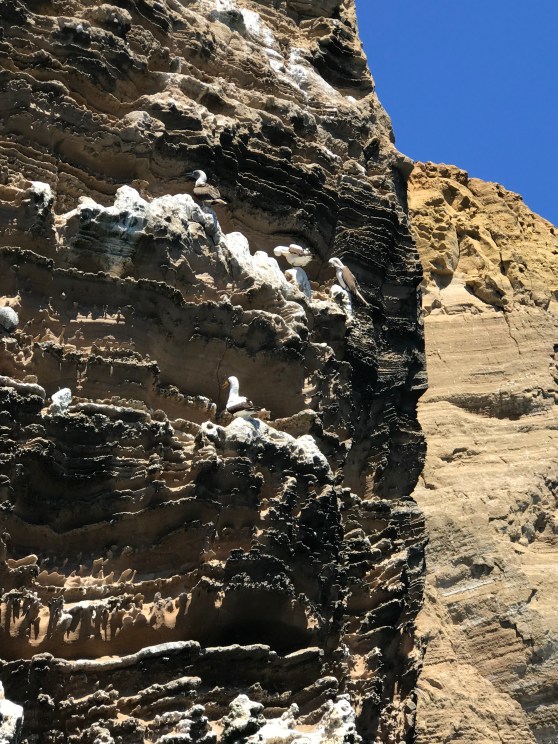
We spotted crabs, blue-footed boobies, penguins, giant sea turtles and cormorants.
After the zodiac cruise, we did a deep water snorkel. Even though the water temp was reported at 66, it felt warmer today with the sun glaring down on our backs. It was an amazing adventure. We swam with numerous giant sea turtles who would sweep up under us and in front of our faces. We also swam alongside sea lions, penguins, cormorants, a multitude of Sergeant Major fish and a few King Angel fish. Hoping we caught some footage of the unbelievable experience on the Go Pro.

Lunch today was a Mexican buffet. A lecture on photography followed lunch. Then we embarked for a walking tour of Isabela Island. The terrain is once again rocky lava with many crevices. We walked among the massive piles of Iguana lying on the rocks sunning themselves.
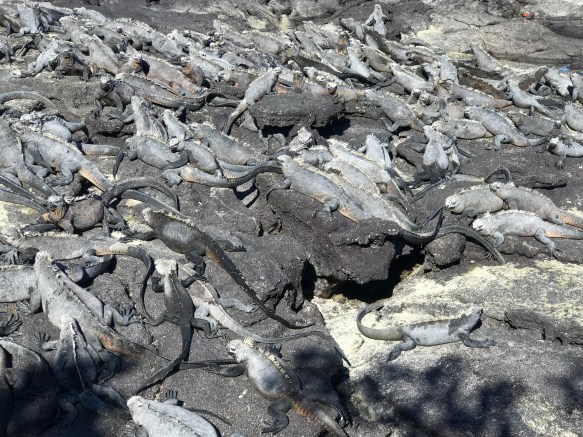
There were also sea lions laying about and we came across a newly born sea lion pup that still had the umbilical cord attached and was nursing.
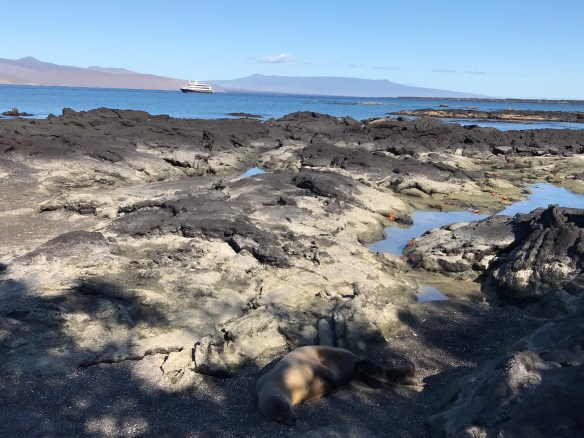
On the path back to the zodiac a snake was spotted. Shockingly, after we got back aboard ship and were having our evening briefing, they showed a video of how many snakes are actually on that island lying in search of baby iguana to chase and eat. I would never have set foot on that island had I known how many snakes were lying in those lava crevices!!
Fernandina Island, Spanish Isla Fernandina, formerly Narborough Island, is the 3rd largest of the Galapagos islands, with an area of 245 sq miles. It is separated from Isabela Island by the Bolívar Strait. Its relief is dominated by a single volcanic crater 3,720 feet, still intensely active. It is without human population.
Isabela Island, largest of the Galapagos Islands, has an area of 2,249 square miles. It was named in the 17th century for George Monck, duke of Albemarle, but now only its northern tip, cut by the Equator, is known as Albemarle. Five volcanic craters reaching an elevation of 5,540 feet, two of which are still active, dominate the island’s centre; hills covered with forests, vines, and orchids separate them from the sandy coastline. Unique to the island are flightless cormorants and penguins. There are also large numbers of land iguanas. Villamil, the main port on the southern coast, handles the island’s products, including potatoes, cattle, wild hogs, reptile hides, and fish.
 D. Kauten's Travel Blog