Jim went on the day trip to Dougga to explore the extensive ruins of a city that flourished under Roman and Byzantine rule. This UNESCO World Heritage site, set on a hilltop overlooking the surrounding valleys, is considered the best-preserved Roman small town in North Africa.

I went on the half day excursion to visit downtown Tunis and the Medina and Souks. We are visiting in the early morning – when all is serene apart from merchants setting up shop and catching up with their neighbors over a fragrant mint tea. As the day evolves, the main drags of Rue de la Kasbah and Rue Jamaa Ezzitouna can be unbearably hot, crowded and noisy. Fortunately, the crush dissipates a few streets either side.

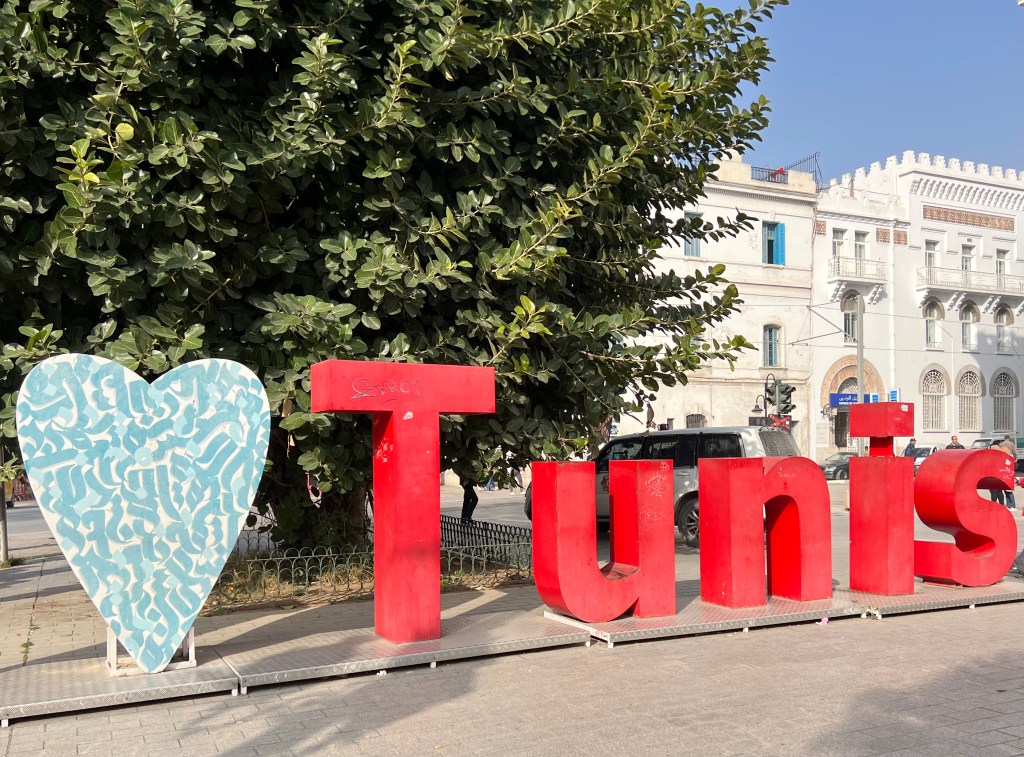
We ventured into the lively heart of the city of Tunis.
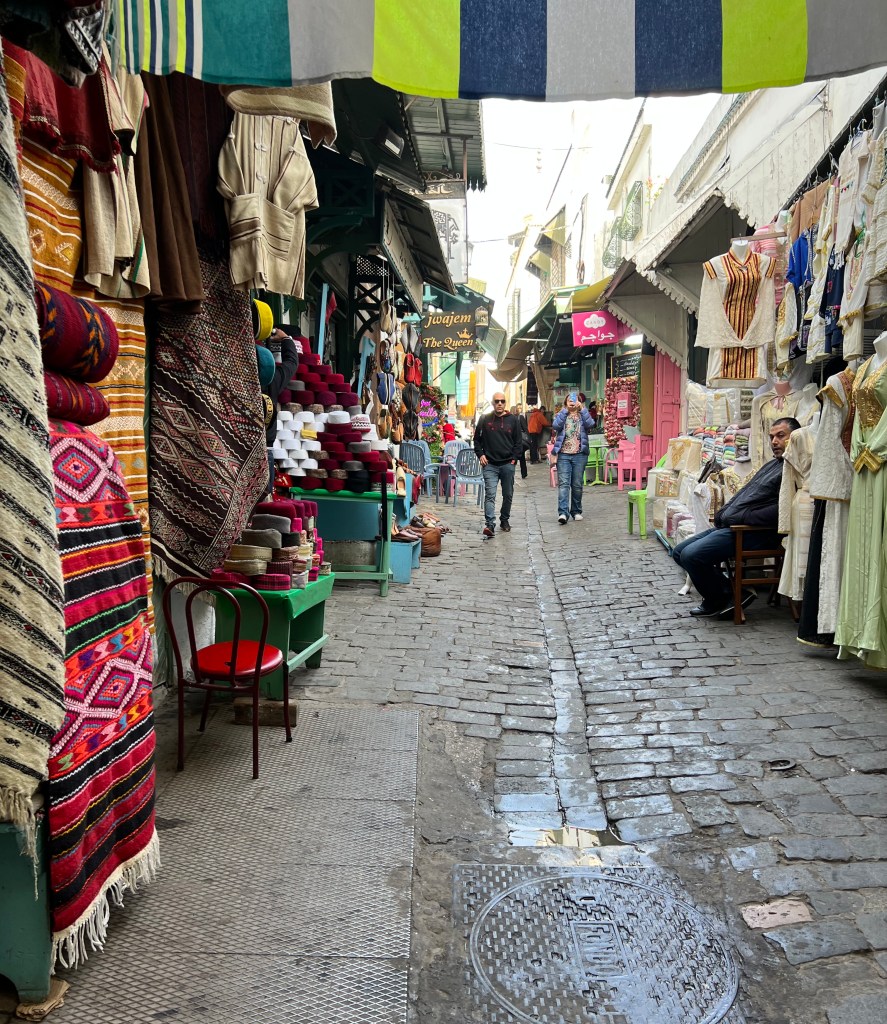
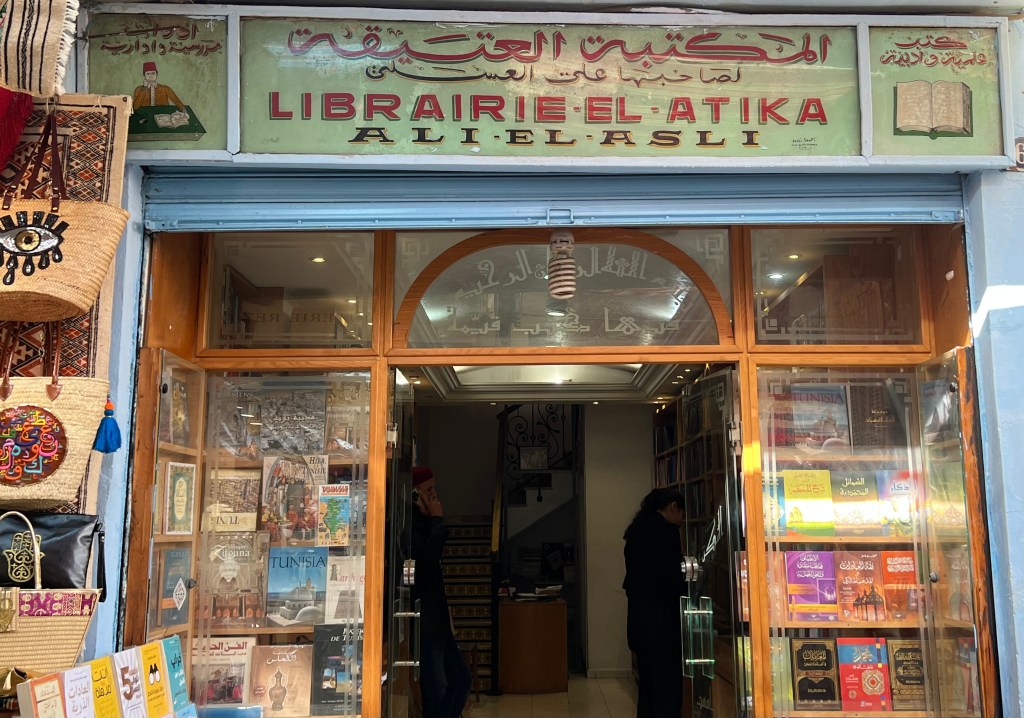
Our first stop was a visit to the sprawling maze of ancient streets and alleyways of the medieval Medina. This UNESCO World Heritage site is known for its intricate architecture and well-preserved historic monuments. I perused a variety of shops in the bustling souk selling items such as shisha pipes, ceramics, fabric, shoes, jewelry and much more. The historic Al-Zaytuna Mosque that has been a landmark of the city of Tunis since the seventh century A.D. Historic palaces, hammams, mosques and madrassas (schools for study of the Quran) are scattered throughout, many lavishly decorated with tiles, carved stucco and marble columns.

The medina’s architecture is ideal for the local climate, with narrow streets that are cool in summer and warm in winter. As space within the medina’s original walls ran out, residents built upwards, constructing vaults and rooms above the streets. (Vaults had to be built high enough to accommodate a loaded camel.) This gives the central lanes a subterranean feel, with shafts of sunlight filtering through.

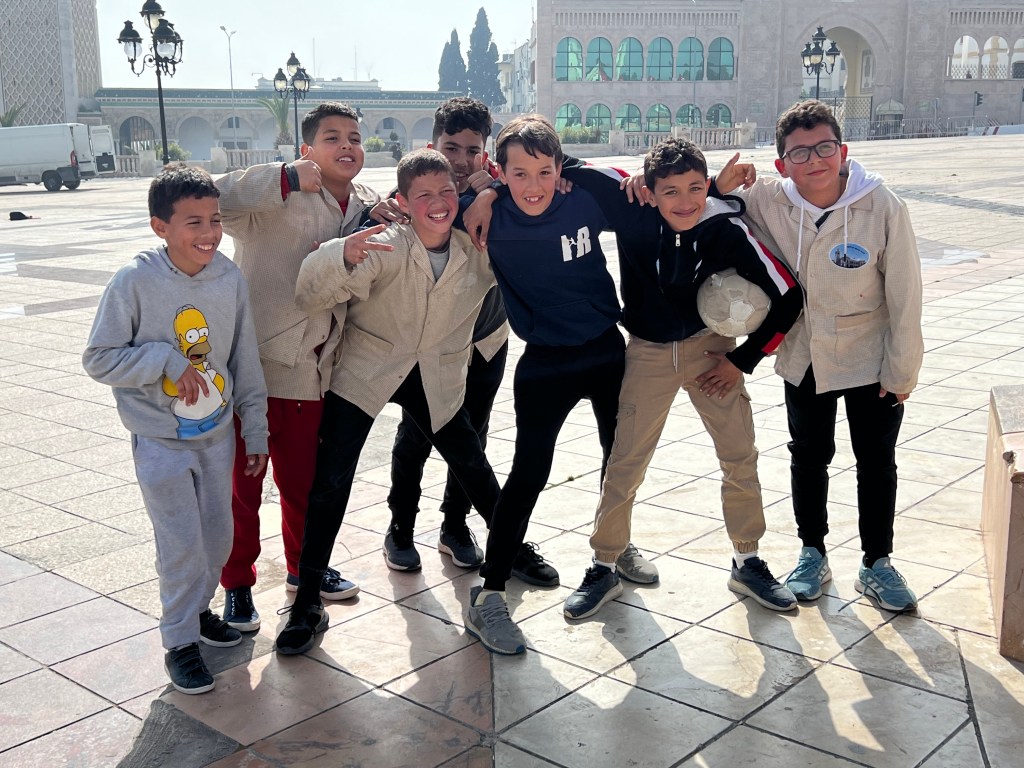

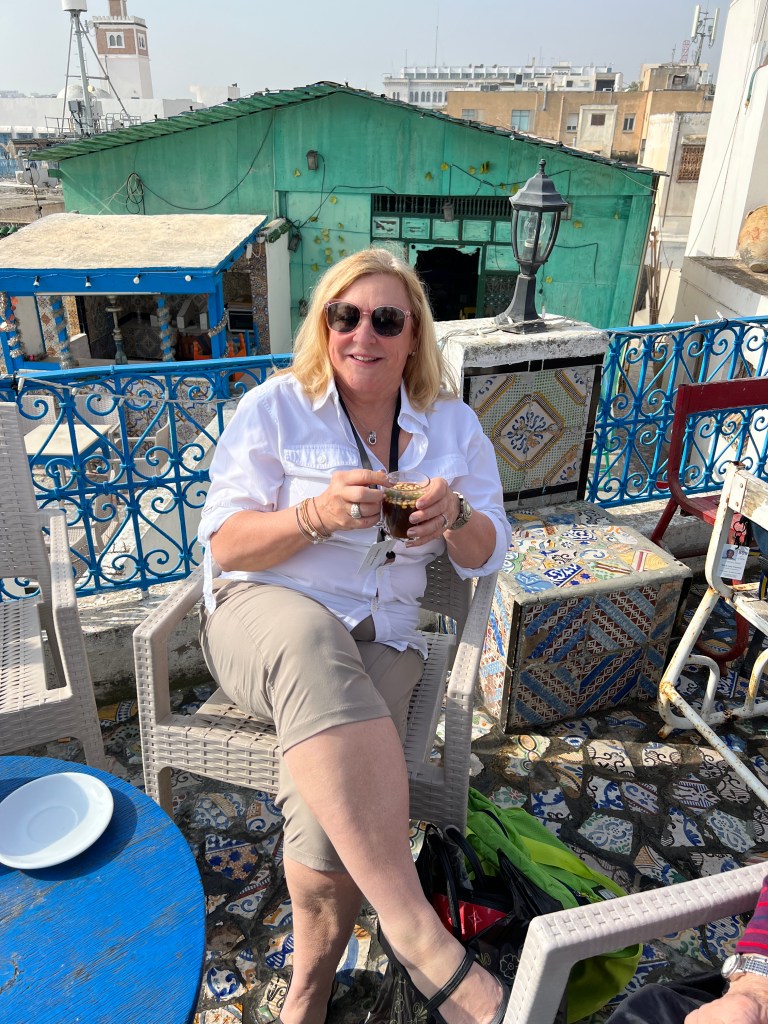

Lunch was in the courtyard of a lovely shopping/restaurant complex. Not too interested in the fish though.
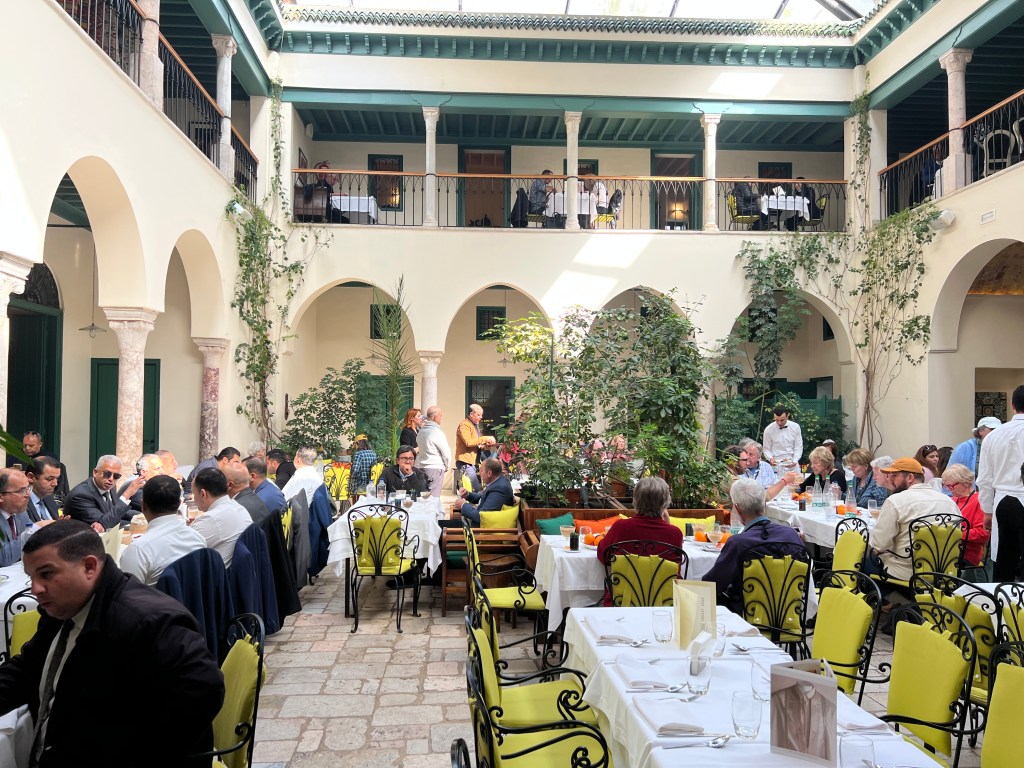
Most shops close on Sundays, and many close on Friday afternoons. Though approximately 20,000 people still live within the medina, the area around Pl de la Kasbah and the streets outside Bab Souika and Bab Jedid are the only pockets where there is any street life in the evenings.

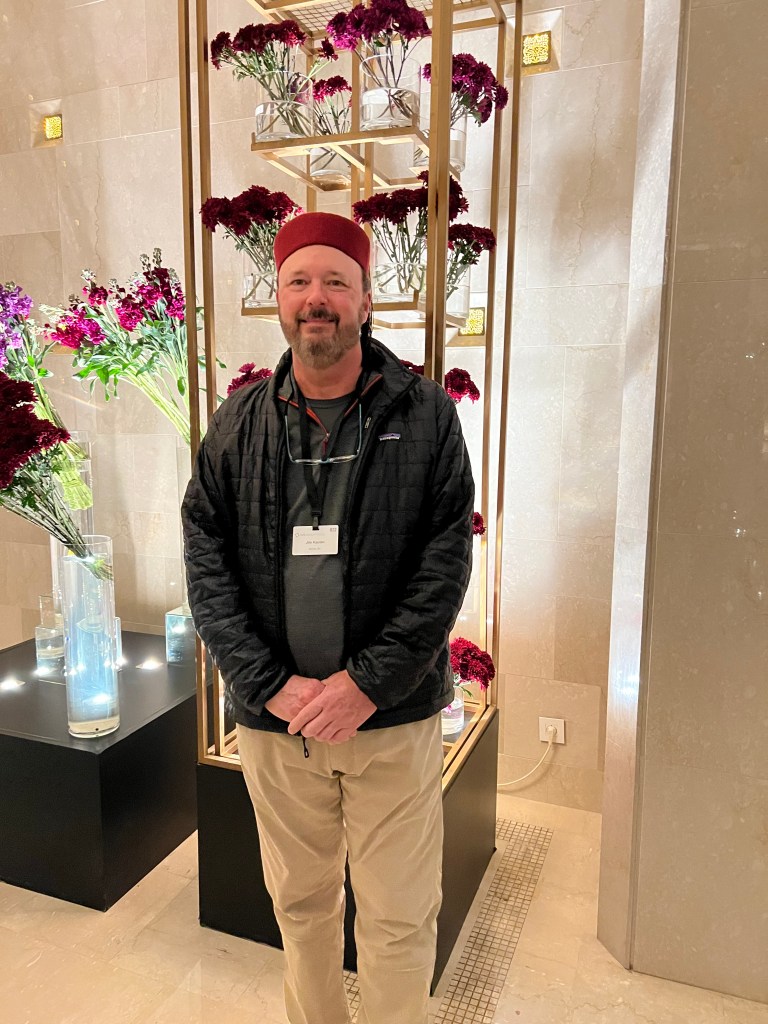
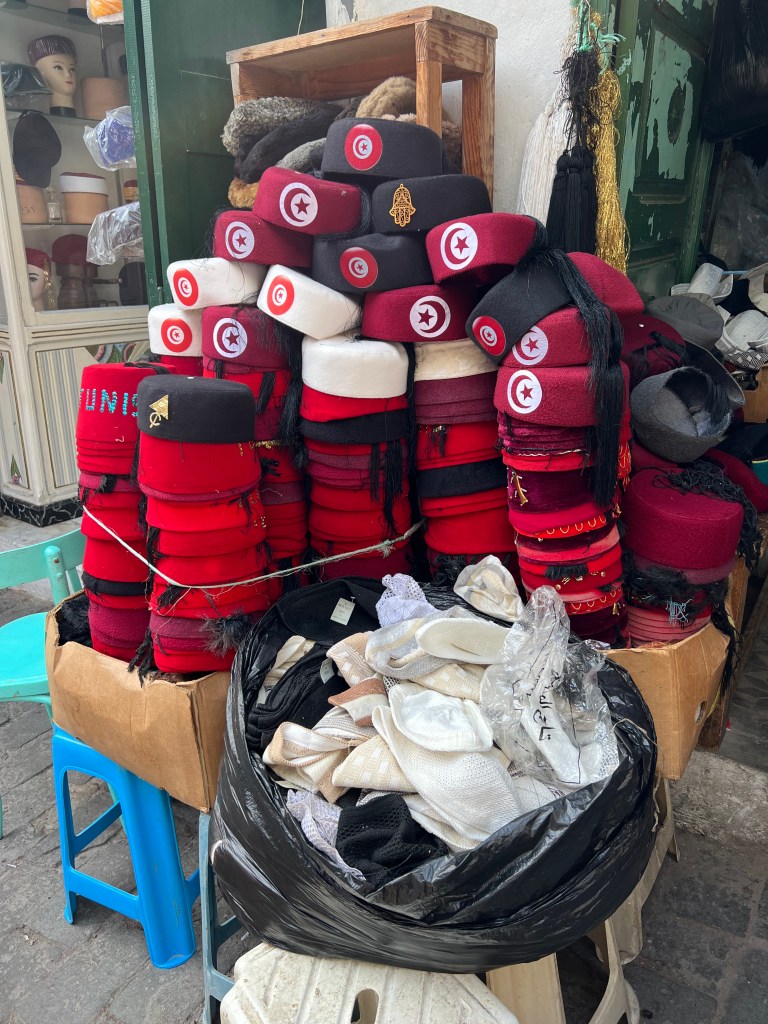
The chechia is the national hat of Tunisia and a close cousin of the beret. In Tunisia, eastern Libya and the region of Benghazi (where it is called “chenna”) the chechia is a vermilion (red) hat, while in the rest of Libya it is black. In parts of Tunisia and Morocco, the chechia is worn in white or blue.
Chechia is flat-surfaced, traditional red woollen hat which could be wore by men and women. It will immediately give you the feeling of living in ancient centuries in the very heart of Tunisian culture.
This national hat has become a Tunisian trademark, among the symbols of the country’s rich heritage.
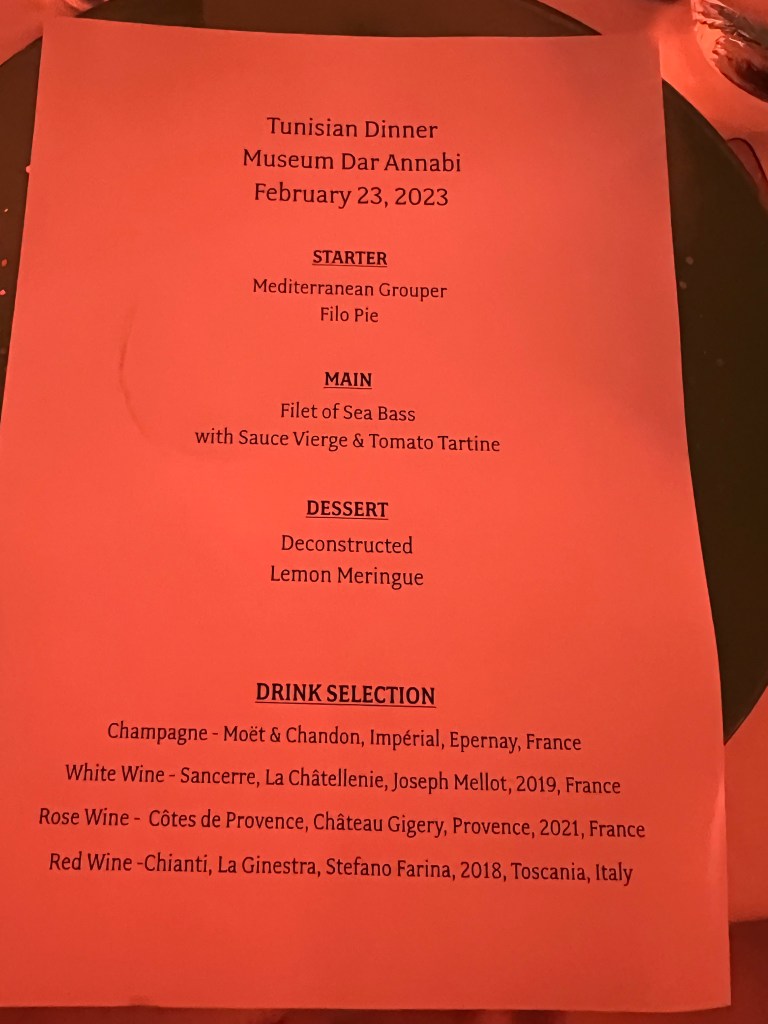
This museum in the famously blue neighborhood of Sidi Bou Saïd showcases a traditional Tunisian lifestyle. Old pieces of furniture, carpets, traditional costumes, old photos, decorations and household items are on display in the rooms. The house is painted in typical Tunisian white and blue.


 D. Kauten's Travel Blog