Friday, March 2nd, 2018 Sunrise: 0553/Sunset: 1928
Prince Olav & Prion Island in the Bay of Isles
Our ship set sail at 6am after a peaceful night parked in Stromness harbor. We were immediately confronted with 45 knot winds and huge swells as we left the protected cove. This will cause today’s expedition plans to be altered. The Captain is seeking a calmer area for us to be able to get out in the Zodiacs and explore.
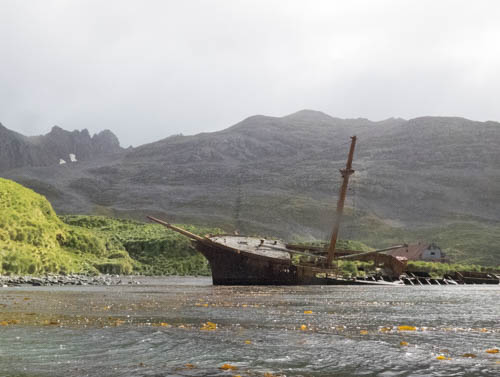
Captain has pulled the ship into Prince Olav Harbor. It is a small harbour in the south west portion of Cook Bay, along the north coast of South Georgia that once served as a seal and whaling station. The swells are a little diminished here but Katabatic winds continue to be present. We ventured out in the Zodiacs in 45 knot wind blasts for a short cruise. Needless to say we were peppered with lots of sea spray. It was interesting to see the landscape of rusty industrial buildings and whaling ships sitting abandoned along the shore and in the water. The surging swells along with the wind gusts made me feel like I was going to be bounced out of the zodiac and right into the frigid water. I was happy when that excursion came to an end.

As we continue our exploration of South Georgia the ship is moving ever northward along its coast, to explore some of the bays, beaches and one particular island in the vicinity of the Bay of Isles.
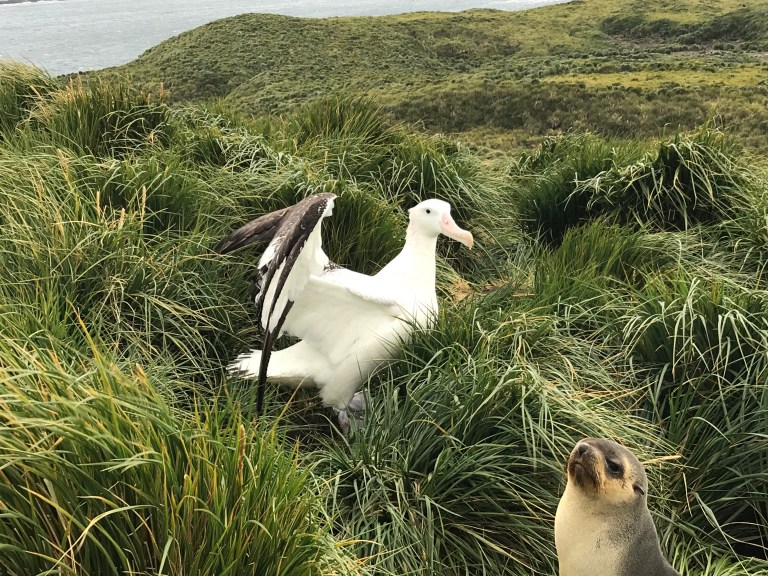
Thankfully, the winds and swells have decreased enough that we’re going ashore on Prion Island. Prion Island lies in the Bay of Isles towards the west end of South Georgia. It was here that Robert Cushman Murphy, the great American ornithologist, did much of his research in 1912-1913 aboard the brig Daisy. The island has been designated as a ‘Specially Protected Area’ by the South Georgia Government, due to its rat-free status and breeding wandering albatrosses.

Access is by permit, in that the island must be specifically named on the visit application and permit. A boardwalk with two viewing platforms was built in 2008 to prevent erosion of the access gully and trampling of prion burrows.
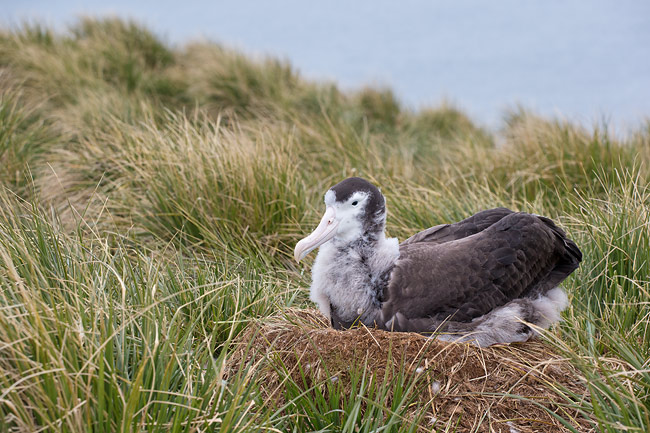
Wandering albatross population counts are conducted annually, and because it is rat-free the island is a breeding area for South Georgia pipits and burrowing petrels.

The island is mostly covered in dense Tussac Grass and many of the slopes are honey-combed with burrows occupied by White-chinned Petrels as well as by Antarctic Prions and Common Diving Petrels.

Four other species breed on Prion Island: Wandering Albatross, Light-mantled Sooty Albatross, and Southern and Northern Giant Petrels. Fur seals were well hidden in the tussac grass as we were making our way up the 300 meter boardwalk to the top of the hill to the breeding area of the Wandering Albatross.
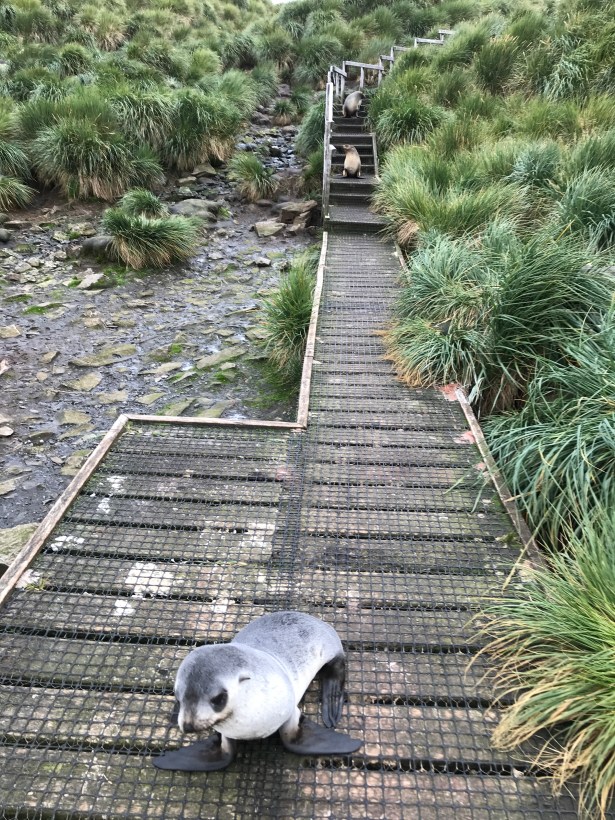
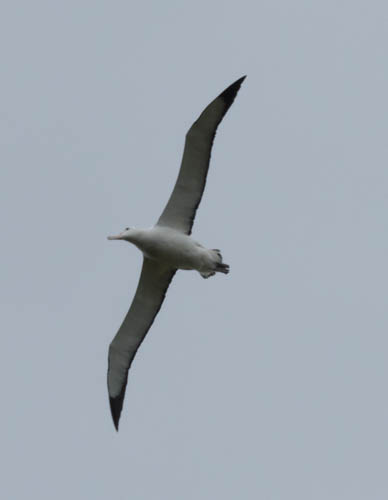
We’ve set sail again along the shoreline of the Bay of Isles with hopes of viewing the landscapes and more wildlife of Salisbury Plains on our way to our ship’s resting spot for the night.
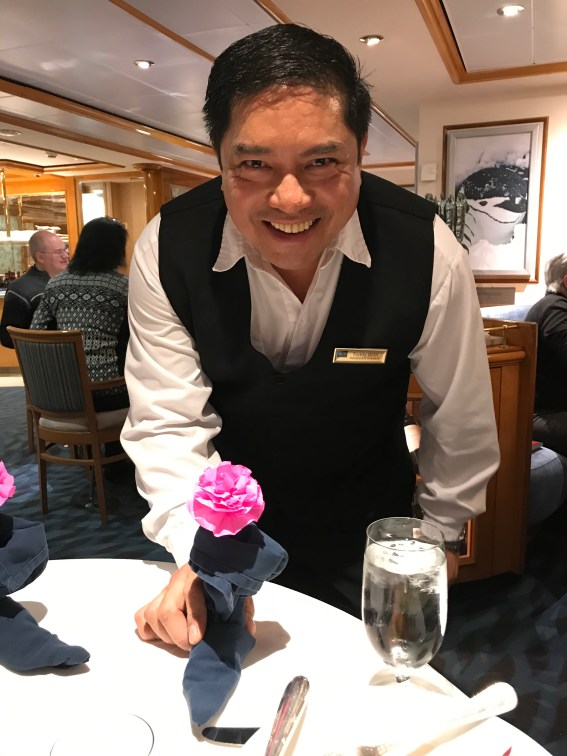
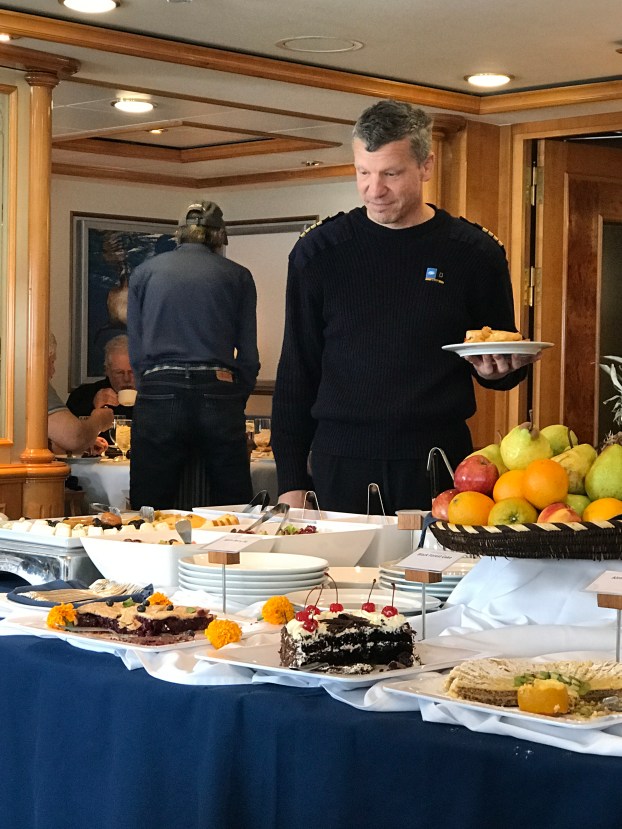
Most nights at dinner we try to sit in Teddy’s section of the dining room. He is our favorite waiter. Jim has been joking around and speaking Spanish to Teddy….Teddy is Phillipino! So now Teddy is teaching us a few Phillipino terms at dinner each night, Not only is he super efficient and remembers every little nuance about what we eat and drink, he’s always in a jolly mood and makes dinner time a blast. Sarah, our favorite beverage waitress, knows our exact drink preferences and always delivers Jim “brown wine” (i.e. Manhattan) at dinner each night.
 D. Kauten's Travel Blog